
Why Does Mouth Tape Keep Falling Off? Fit and Hold Tips
If your mouth tape keeps falling off, start with the surface and fit: skincare residue, moisture, facial hair, repeated handling, or a strip that does not sit comfortably can all interfere with attachment. A loose edge does not automatically mean you need stronger adhesive. Check the product directions and identify when the lifting starts before changing products.
First, separate a hold problem from a breathing concern. If you remove tape because breathing feels difficult, your nose is blocked, or you wake gasping, stop using it and seek medical guidance. For adults whose clinician considers mouth tape appropriate, this guide offers a practical way to review application, comfort, and product choices without turning bedtime into an adhesive experiment.
Key Takeaways
- Check clean, dry contact first. Moisturizer, balm, oils, and damp skin can get between the adhesive and its intended surface.
- Notice the pattern. Immediate lifting, one loose corner, and deliberately removing the strip are different situations.
- Use a fresh strip. Repeated repositioning and reuse can change hold and cleanliness.
- Keep comfort part of the decision. More adhesive, extra layers, or aggressive skin preparation are not sensible shortcuts.
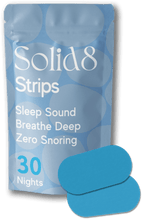
- Compare the actual design. Solid8 uses flexible woven fabric and hypoallergenic, latex-free adhesive; individual fit and skin response still matter.
What does “mouth tape falling off” actually mean?
Mouth tape is an adhesive strip intended to help keep the lips closed. Falling off describes attachment, not sleep quality or the cause of mouth breathing. A strip found on your pillow cannot tell you whether moisture, friction, poor initial contact, or your own hand removed it.
Make the description specific. Did one end curl as soon as you applied it? Did the whole strip come away after you repositioned it? Did you consciously peel it off because it felt uncomfortable? Those details are more useful than assuming the adhesive failed in the same way every time.
Read the mouth-taping safety guide before working on retention. An accessory staying attached is only useful when the accessory is appropriate for the person using it.
Common reasons mouth tape will not stay on
Skincare or lip products are in the contact area
Facial oils, moisturizer, sunscreen left from the day, and lip balm can leave a film where the strip needs contact. Solid8's current directions begin with clean, dry skin and specifically mention removing oils and moisturizers from the application area. Applying more pressure over a slippery film does not address that preparation step.
Look at where products actually spread, including the corners of your mouth. You do not need to abandon your whole skincare routine. Our mouth tape and skincare guide explains how to think about the small area shared by skincare and adhesive. Do not skip prescribed topical treatment to make room for tape; ask the prescriber about compatibility.
The surface is still damp
Applying a strip immediately after washing, brushing your teeth, drinking, or a hot shower may leave moisture around the lips. Check the intended contact area after completing those activities. Follow the pack directions rather than inventing a fixed waiting period that might not match your routine.
Moisture noticed later is a different question. Write down whether the edge looks damp when you remove it, but avoid assuming that every loose strip proves drooling. If oral symptoms are persistent or unexplained, discuss them with a dentist or doctor instead of choosing adhesive solely to resist them.
Facial hair reduces direct contact
A beard or mustache changes the surface available to the adhesive. A strip can appear to cover the right area while mostly resting on hair. That is a fit observation, not a reason to press painfully or add another layer over the first.
Solid8 describes its tape as beard-friendly while noting that adhesion depends on skin contact. Beard length and placement vary, so the label cannot guarantee identical hold for everyone. Use our mouth tape with a beard guide to compare practical fit questions without assuming you must shave to use a product.
The strip has been handled or repositioned repeatedly
Repeatedly touching the adhesive, moving the strip between positions, or setting it down while preparing for bed can change the contact surface. Keep preparation simple: finish the activities that require your mouth, read the instructions, and open a fresh strip when you are ready to apply it.
If you need several attempts each time, pause and review the supplied application guidance. A product that only works after a complicated workaround may not suit your routine. Ask the brand for clarification instead of treating each additional piece as another chance to force the fit.
One edge is catching during movement
A lifted corner creates an edge that can catch against bedding or a hand. Consider whether the same side repeatedly loosens and whether it already felt raised before bed. This can help distinguish an initial placement issue from something you noticed only in the morning.
Our guide for side sleepers explores comfort and bedding contact. Do not force yourself into an uncomfortable sleep position just to protect a strip, and do not stretch tape tightly across your face to compensate for ordinary movement.
Compare the pattern before choosing a fix
The table below organizes observations. It does not establish the cause of nighttime mouth opening or confirm that taping is suitable.
| What you notice | What to check | Practical next step |
|---|---|---|
| Both ends lift immediately | Dryness, skincare residue, and the application instructions | Review preparation before judging adhesive strength |
| One corner curls first | Initial edge contact and repeated repositioning | Compare placement with the manufacturer's demonstration |
| Tape rests mostly on facial hair | Available skin contact and the strip's shape | Ask whether the design fits your facial hair pattern |
| Strip is loose after repeated handling | Whether adhesive was touched or the strip reused | Use a fresh strip as directed rather than reviving old adhesive |
| You remove it because you feel restricted | Breathing difficulty or other discomfort | Stop use; seek guidance rather than increasing hold |
| It stays attached but leaves irritation | Skin response during wear and removal | Stop use and discuss persistent symptoms with a clinician |
A simpler application routine to review
Use these steps only alongside your product's current instructions and your clinician's advice. They are a preparation checklist, not a new taping technique or proof of overnight safety.
- Finish your bedtime activities. Complete brushing, drinking, and skincare before opening the strip so you are less likely to remove and reapply it.
- Check the intended contact surface. Follow directions for clean, dry skin. Avoid applying over irritated, broken, or freshly damaged skin.
- Read placement guidance. Use the supplied shape as intended. Do not improvise a tighter arrangement, cut new openings, or combine several strips.
- Handle the adhesive as little as practical. Keep the strip on its backing until you are ready, following any tabs or peeling instructions provided.
- Apply gently as directed. Check for a folded edge or obvious poor contact without repeatedly lifting and pressing the same strip.
- Stop for discomfort. A comfortable moment while awake does not establish safety during sleep. Remove the product if it causes breathing difficulty, distress, or irritation.
Keep supplies somewhere convenient so you can follow the same uncomplicated sequence. You should not need alcohol scrubbing, an adhesive booster, or an elaborate collection of extra tapes to use a bedtime accessory.
Comparing a simpler strip design? Review the shape, materials, and current directions for Solid8 Mouth Tape alongside your own fit and comfort needs.
Should you switch to stronger mouth tape?
Only consider another adhesive after reviewing basic preparation and fit. Stronger hold is not automatically more comfortable, easier to remove, or more suitable for your skin. It also cannot explain why you keep opening your mouth or removing a strip.
The useful comparison is the whole experience: contact at application, comfort while wearing it, and how it comes away. Our gentle versus strong adhesive guide discusses those tradeoffs. Avoid using overnight retention as the only score that matters.
| Choice | What it can clarify | What it cannot establish |
|---|---|---|
| Reviewing clean, dry preparation | Whether the starting surface matches directions | That the product is suitable for nighttime breathing |
| Comparing strip shape | Whether contact and coverage suit your face | That more facial coverage is better |
| Choosing a different adhesive | Whether another product feels more comfortable | That stronger attachment improves sleep |
| Adding overlapping layers | No reliable answer to the original problem | Safety, comfort, or a solution to nasal blockage |
| Contacting the manufacturer | Correct application and product-specific storage guidance | A medical explanation for breathing symptoms |
Do not rescue a used strip or change its adhesive
Solid8 directs customers to use a fresh strip for each application. Saving a loose strip on a mirror, pressing it onto its backing for tomorrow, or adding another adhesive changes the product experience. A strip that still feels sticky is not necessarily clean or performing as intended.
See why mouth tape is single-use for the difference between reducing waste and reusing an adhesive product. Keep unopened strips protected according to the packaging, and check the manufacturer's storage instructions if the remaining supply behaves differently from earlier pieces.
If a whole pack seems unusual, contact support with the order number, product name, and any lot information on the pouch. Describe whether the liner separates normally and whether the problem begins immediately. Keep the remaining supply for the brand's instructions rather than experimenting with heat, water, or extra glue.
Removal and skin comfort belong in your hold checklist
A strip that stays on but hurts to remove has not met a comfort goal. Follow removal directions, peel gently, and support the surrounding skin as Solid8 instructs. Do not rip the strip away to test how firmly it attached.
Consult the mouth tape removal guide when comparing designs. If your skin becomes irritated, stop using the product rather than immediately trying another stronger strip. The American Academy of Dermatology lists itching, rash, burning, and blistering among possible contact dermatitis symptoms. A clinician can assess persistent or significant reactions.
“Hypoallergenic” and “latex-free” describe stated product features; they do not guarantee that every person's skin will tolerate the adhesive. Record what happened during wear and removal so your next conversation is about your actual experience.
When falling off is a reason to pause
If you remember removing the tape because you could not breathe comfortably, treat that as a reason to stop. Do not buy a stronger product to make removal less likely. Nasal blockage, unexplained mouth breathing, or concerns about prescribed sleep equipment deserve an appropriate clinical discussion.
The NHLBI sleep apnea symptom guide includes frequent loud snoring, breathing pauses, gasping, and daytime sleepiness. These observations warrant assessment; neither a detached strip nor a firmly attached one can diagnose or exclude a sleep disorder.
A 2025 systematic review found limited evidence for mouth taping and highlighted potential harms, particularly with nasal obstruction. A 2026 review also described limited mouth-taping data. Hold troubleshooting should never be presented as evidence that taping treats snoring or sleep apnea.
What to compare if Solid8 fits your needs
Solid8 Mouth Tape uses flexible woven fabric with hypoallergenic, latex-free adhesive. Its rounded strip design and stated clean-removal approach are useful features to compare if you want a straightforward accessory and your clinician considers it appropriate. Check the actual product photos and directions rather than choosing from a generic tape illustration.

Our mouth tape materials comparison offers additional label questions. If your main complaint is nasal comfort, Solid8 Nose Strips are a different accessory placed outside the nose. They do not secure mouth tape or make mouth restriction appropriate when nasal breathing is difficult.
Choose supply size after deciding whether the product suits you. Compare the current one-time and subscription options, delivery interval, and cancellation terms on the product page. Avoid committing to a large supply simply because you hope more strips will solve an unresolved application problem.
Frequently asked questions
1. Why does my mouth tape peel off immediately?
Check for moisture, skincare residue, repeated repositioning, or poor contact. Compare your application with the current pack directions before assuming you need stronger adhesive.
2. Can moisturizer make mouth tape fall off?
Moisturizer in the application area can interfere with direct contact. Follow the manufacturer's clean, dry preparation guidance without abandoning prescribed skin treatment.
3. Can I put mouth tape over lip balm?
Check the instructions for your specific product. Balm can spread beyond the lips, so consider where the adhesive is intended to sit and avoid applying over a slippery film.
4. Does a loose strip mean I need stronger tape?
No. Surface preparation, facial hair, handling, and shape deserve review first. Stronger hold does not establish better comfort or medical suitability.
5. Why does only one side lift?
Notice whether that edge was folded or raised at application and whether the same side repeatedly catches. A single loose corner does not identify the cause on its own.
6. Will mouth tape stick to a beard?
Performance depends on the design and available skin contact. Solid8 describes its product as beard-friendly, but individual facial hair patterns still affect fit.
7. Should I use two strips if one falls off?
Do not improvise overlapping layers to increase restraint. Follow the supplied application method and ask the manufacturer about fit instead.
8. Can I reuse a strip that came off early?
Solid8 specifies a fresh strip for each application. Reusing one can change its cleanliness and hold, even if part of the adhesive still feels sticky.
9. Should I clean my skin with alcohol first?
Do not add harsh preparation steps just to increase adhesion. Use the product's stated preparation routine and seek advice if ordinary application causes irritation.
10. Why do I remove mouth tape in my sleep?
A missing strip does not reveal what happened overnight. If you remember breathing discomfort or distress, stop use and discuss that experience rather than trying to prevent removal.
11. Can side sleeping affect attachment?
Bedding or hand contact may catch an already loose edge. Review initial fit and comfort without forcing an uncomfortable sleeping position to preserve the tape.
12. Does hypoallergenic tape rule out a skin reaction?
No. Skin responses vary, including with products labeled hypoallergenic. Stop using a strip that causes irritation and seek guidance for persistent symptoms.
13. What if I use CPAP and the tape comes off?
Discuss mouth opening, dryness, or leak concerns with your sleep-care team. Do not change prescribed settings or increase mouth restraint on your own.
14. Should I try nose strips to keep mouth tape on?
Nose strips sit outside the nose and do not attach or reinforce mouth tape. A nasal accessory is not permission to tape when you cannot breathe freely through your nose.
15. What should I tell customer support?
Share the product name, order details, and whether lifting happens immediately or later. Describe preparation and any lot information without assuming a manufacturing defect or repeatedly testing on irritated skin.
Make fit and comfort part of your choice
If mouth tape is appropriate for you, explore Solid8's rounded strip design, flexible woven fabric, and hypoallergenic, latex-free adhesive. Review the current directions and choose a supply around your actual routine.
Explore Solid8 Mouth Tape- Compare the actual shape and contact area.
- Follow clean, dry application and gentle removal guidance.
- Use a fresh strip each time, and stop for discomfort.
This article is for general education only and is not medical advice. Consult a qualified clinician before using mouth tape, including with CPAP. Do not use it when you cannot breathe freely through your nose; it does not treat sleep apnea or replace prescribed therapy.