Can You Reuse Mouth Tape? Hygiene, Hold, and Better Value
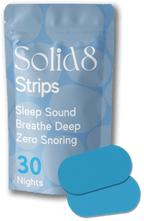
Can you reuse mouth tape? For Solid8 Mouth Tape, the answer is no. Each strip is designed for single use. Use a fresh strip for a new night, even if yesterday's piece still feels sticky. Remaining tack does not establish that a used strip is clean, undamaged, or ready for another application.
If you are trying to make a pack last longer, focus on preventing wasted strips and choosing a supply that matches your routine. This guide explains the difference between reuse and repositioning, what to do after removing a strip, and how to compare value without counting an extra night that the product was never designed to provide.
Key Takeaways
- Solid8 Mouth Tape is single-use. Start each new night with a fresh strip.
- Stickiness is only one property. It does not prove cleanliness or reliable attachment after removal.
- Do not wash or add adhesive. Follow the product's directions instead of trying to restore a used piece.
- Comfort comes before finishing a strip. Remove it when needed and stop if your skin or breathing feels uncomfortable.
- Plan your supply around actual use. Compare pack sizes and subscription options after deciding that the product suits you.
What does single-use mouth tape mean?
Single-use describes the intended life of an individual strip. It does not mean the entire pack is disposable after opening, and it does not describe how many nights you must use the product. Unused strips remain your supply; a strip you have worn is a different item.
Solid8's current care guidance calls for a new piece every night. That gives you a straightforward rule without having to judge a used strip by appearance. Keep unused pieces protected in their original packaging and follow any storage instructions supplied with your order.
Reusable products should have explicit reuse instructions, including how to clean them and when to replace them. A soft fabric backing, flexible shape, or durable-looking edge is not a reuse instruction. If a listing does not answer the question, ask the manufacturer before treating the item as reusable.
Our mouth tape materials comparison explains why backing material and adhesive are separate features. Both matter when reading a label, but neither overrides the directions for the finished product.
Why a strip can feel sticky and still need replacing
It has already been in contact with your skin
During wear, a strip can come into contact with skin oils, moisture, and products used around the mouth. After removal, handling and storage add more opportunities for contact with other surfaces. A piece left on a bathroom counter is no longer in the same condition as a protected unused strip.
You do not need to invent a bacterial count or assume that every reused strip causes an infection to make a sensible decision. The practical point is that a single-use product has no manufacturer-approved second-use routine. Looking clean is not the same as being intended for reuse.
Peeling and handling change the strip
Removal can leave folds, stretched areas, or edges that stick to themselves. Repeatedly pulling those edges apart adds handling and may make placement more awkward. Pressing the adhesive with a fingertip tells you only that some tack remains at that spot.
It does not tell you how the entire strip will behave on your face. Our guide to gentle versus strong adhesive helps separate attachment from comfort. The goal is appropriate use, not finding the strongest possible bond.
A weaker second use is not a sensitive-skin strategy
It may seem appealing to reuse a strip because it feels less sticky. But a previously worn piece is not a controlled way to choose a gentler adhesive. You would be changing its condition without knowing which features changed or how your skin will respond.
If removal bothers you, reconsider the product and its directions. Do not solve discomfort by saving used tape. The sensitive-skin selection guide offers useful label questions, including why a hypoallergenic description cannot promise that every person will tolerate a product.
Reuse, repositioning, and replacement compared
These terms often get mixed together. Use the situation, rather than the amount of stickiness left, to decide what question you need answered.
| Situation | What it means | Practical next step |
|---|---|---|
| Putting on last night's strip | Reuse across separate nights | Discard it and use a fresh strip if use is appropriate. |
| Adjusting a strip during initial placement | Repositioning before wear | Follow the product's directions; replace a damaged or contaminated piece. |
| Taking a strip off to drink | Removal during the night | Meet your need first. Do not feel obliged to resume use. |
| Finding a loose strip on bedding | A removed piece exposed to another surface | Discard it rather than putting it back on. |
| Opening the pack but leaving strips protected | Storage of unused supply | Keep the pack protected according to its instructions. |
| Rinsing yesterday's strip | Attempting to restore a single-use item | Do not wash it for reuse. |
A brief adjustment during application is not the same as saving a strip for tomorrow. However, there is no universal number of permitted adjustments. Avoid repeatedly peeling and pressing until the material becomes awkward to handle. Check the instructions and contact the brand when the application guidance is unclear.
What if you remove mouth tape during the night?
Remove the strip whenever you need to drink, speak, or respond to discomfort. Getting through a whole night with one piece is not an achievement you need to protect. Do not postpone a normal need just because replacing the strip would use another piece.
Once you have removed it, the simplest routine is to discard it. You can leave it off for the rest of the night. If you choose to resume use and it remains appropriate, follow the directions with a fresh strip rather than retrieving the removed one.
Repeated removal is useful feedback. Consider whether the timing is inconvenient, the application feels awkward, or the accessory simply does not fit your routine. A product that requires constant attention may not be worth continuing, even if its cost per strip looks attractive.
If you removed it because breathing felt difficult, do not reapply it. A replacement strip cannot resolve that concern. Persistent nighttime breathing symptoms need assessment, not a different adhesive technique.
Planning a fresh-strip routine? Compare the pack sizes and current subscription choices for Solid8 Mouth Tape after reviewing suitability and the product directions.
Can you wash, sanitize, or make mouth tape sticky again?
Do not wash a single-use strip and assume that drying restores it. Water, soap, disinfectant, or other household products do not create a validated cleaning method for an item that was not designed to be cleaned. A dry-looking surface does not establish that its adhesive will behave as originally intended.
Avoid adding glue, another adhesive, or extra layers of tape. These changes create a different arrangement from the supplied product. They also make it harder to know what is touching your skin and how you would remove it comfortably.
Putting a worn piece back on its release liner does not turn it into an unused strip. The liner protects adhesive before use; it is not a cleaning device. Keep used and unused pieces separate so you do not accidentally reach for yesterday's strip when tired.
If the appeal is avoiding daily disposable pieces, ask whether a different approach is appropriate for your underlying concern. Do not substitute household tape simply because it is inexpensive. Our mouth strips versus medical tape comparison explains why a general tape label is not enough to establish suitability for sleep.
How to reduce wasted strips without reusing them
Finish your usual bedtime tasks first
If use is appropriate for you, leave application until after the activities that would immediately require removal. Finish brushing your teeth, your usual skincare, and any conversation before handling a strip. Keep water accessible and remove the tape if you need a drink later.
The aim is fewer avoidable interruptions, not a rigid bedtime rule. Never skip prescribed treatment or delay a necessary activity to preserve a piece of tape. A comfortable routine should accommodate your needs.
Read placement instructions before peeling
Look at the supplied directions while the strip is still protected. Check its orientation and how the backing separates. This is easier than figuring it out while holding an exposed adhesive surface between your fingers.
Use clean hands, minimize contact with the adhesive, and follow the stated skin-preparation guidance. Do not aggressively scrub your skin or use harsh solvents to improve attachment. If skincare and the product instructions are difficult to reconcile, ask for guidance rather than improvising.
Protect the rest of the pack
Keep unused strips in the original packaging instead of leaving loose pieces on the sink. Choose a storage spot that follows the label and keeps the supply away from splashes. Close the packaging as intended after taking out what you need.
For a trip, pack enough unused strips for your planned use and a small allowance for accidental damage. Avoid carrying exposed pieces loose in a toiletry bag. Our travel planning guide can help you organize your supply; being away from home does not change the single-use rule.
Review recurring waste before ordering more
If several pieces become unusable during every application, pause and identify why. Is the backing hard to separate? Are strips being handled with wet hands? Is facial hair interfering with placement? Contact the brand with the specific problem instead of compensating by ordering a much larger pack.
Use the first-time buyer checklist to compare size, material information, and directions. A smaller initial purchase can be more sensible than committing to a large supply before you know whether the product is a practical fit.
Compare value using fresh strips, not hypothetical extra nights
For a single-use product, compare the amount you actually pay with the number of unused strips supplied. Keep the calculation consistent across options. Include delivery charges where relevant, and compare one-time purchases with one-time purchases before considering recurring plans.
Cost per fresh strip = total order cost divided by the number of strips. This is a purchasing calculation, not a measure of better sleep. Do not halve the result by assuming that every strip can be worn twice.
| Buying approach | What to compare | What to watch |
|---|---|---|
| Smaller one-time pack | Initial spend and enough supply to assess practical fit | Delivery costs can change the total. |
| Larger one-time supply | Total strip count and cost per fresh strip | Only buy a quantity you reasonably expect to use. |
| Subscription | Recurring price, quantity, and delivery frequency | Read the current renewal and management terms. |
| Using yesterday's strip again | An assumed saving outside the directions | Do not include unsupported reuse in the value calculation. |
Count your remaining supply before choosing a delivery interval. Someone who uses an accessory occasionally will need a different schedule from someone who uses it consistently. A subscription should match that pattern rather than encourage you to use a product more often than appropriate.
Check current prices and terms when ordering. Discounts, delivery options, and available quantities can change. Comparing the checkout total is more useful than relying on an old screenshot or a headline saving that applies to a different purchase option.

When replacing the strip is not the answer
If tape causes soreness, a rash, or persistent irritation, stop using it rather than changing to a fresh piece over the same area. The American Academy of Dermatology explains that identifying and avoiding a contact trigger is central to managing contact dermatitis. A dermatologist can assess a recurring reaction.
Breathing suitability is separate from hygiene. Cleveland Clinic's mouth-taping guidance notes limited evidence of benefit and potential breathing and skin risks. Talk with a qualified clinician before starting, and do not use tape to force breathing through a blocked nose.
Repeated loud snoring, gasping, or observed breathing pauses deserve assessment. The NHLBI symptom guide explains these warning signs. Mouth tape does not replace prescribed sleep-apnea care, and this article is not a taping guide for children.
External Solid8 Nose Strips are a different accessory, positioned outside the nose. Adding one does not establish that mouth taping is safe for you. Choose accessories around an appropriate plan, not as a way to work around unexplained breathing difficulty.
Frequently asked questions
1. Can you reuse Solid8 Mouth Tape?
No. Solid8 directs customers to use a fresh strip every night because each piece is designed for single use. Remaining stickiness does not change that instruction.
2. Can I reuse a strip if I wore it for only a short time?
Brief wear does not turn a single-use strip into a reusable product. Once removed, discard it rather than saving it for another night.
3. What if I remove it to drink water?
Remove it and drink when needed. You can leave it off afterward; if you resume appropriate use, follow the directions with a fresh strip.
4. Does putting it back on the liner keep it clean?
The liner is not a cleaning system. Returning a worn strip to it does not restore the condition or intended use of an unused piece.
5. Can I rinse mouth tape and let it dry?
Do not wash single-use tape for reuse. Unless a manufacturer explicitly provides cleaning and reuse directions for a particular product, do not invent your own method.
6. Can I make a used strip sticky again?
Do not add glue, extra adhesive, or layers to restore attachment. Discard the used piece and review the original directions if attachment is a recurring problem.
7. Is an unused strip reusable?
An unused strip is simply unused supply. Keep it protected as directed; opening the outer pack does not mean you have worn every strip inside.
8. Is reusing tape gentler on sensitive skin?
A worn strip is not a reliable way to control adhesive strength. If removal is uncomfortable, consult the directions and our removal comfort guide, and stop if irritation develops.
9. Can two people share one strip?
No. Do not share a worn strip. Each person should use their own unused piece only if the product is appropriate for them.
10. Does stronger adhesive mean a strip lasts for more nights?
No. Adhesive strength and permitted reuse are different specifications. Follow the single-use instruction regardless of how firmly a piece still attaches.
11. Should I replace tape that falls onto my bedding?
Discard the removed strip rather than returning it to your face. If this keeps happening, review fit and directions instead of layering on more tape.
12. Can I reuse a nasal strip instead?
Follow the directions for that exact nasal-strip product. Being worn on the nose rather than the mouth does not automatically make an adhesive strip washable or reusable.
13. Is a subscription always the cheapest option?
Compare the current total, strip count, and delivery schedule. A recurring order only makes practical sense when the quantity and timing fit your needs.
14. Should I use a new strip over irritated skin?
No. Stop use and let a qualified professional assess persistent or recurring irritation. A fresh adhesive surface does not address why your skin reacted.
15. What should I check before trying mouth tape?
Discuss suitability, read the directions, and review our mouth-taping safety guide. Fresh tape does not make mouth taping appropriate for everyone.
Make fresh strips part of a considered routine
If mouth tape is appropriate for you, explore Solid8's current supply and subscription options. Choose a quantity that fits your actual use, keep unused strips protected, and start a new night with a fresh piece.
- Compare pack sizes before committing.
- Review recurring price and delivery timing.
- Follow current application and removal directions.
This article is for general education only and is not medical advice. Speak with a qualified clinician about breathing concerns, persistent skin irritation, or a diagnosed sleep condition.