Why Do I Sleep With My Mouth Open? Causes and How to Stop
Share
If you are asking, “Why do I sleep with my mouth open?”, start by considering whether breathing through your nose feels difficult. Nasal congestion or a structural blockage can lead to mouth breathing. Sleep-related breathing problems are another possibility. An open mouth is a clue worth exploring, but it does not tell you the cause on its own.
The best next step is to understand what is happening before choosing a product to keep your lips together. Notice whether the problem is occasional or persistent, whether your nose feels blocked, and whether anyone has observed snoring or breathing pauses. This guide helps you organize those observations and compare practical options without assuming that every open-mouth sleeper needs mouth tape.
Key Takeaways
- An open mouth during sleep is an observation, not a diagnosis.
- Nasal airflow deserves attention before you try to change lip position.
- Persistent snoring, gasping, or witnessed breathing pauses call for professional evaluation.
- Nose strips and mouth tape have different contact points and purposes.
- Compare Solid8 accessories only after deciding whether an accessory fits your situation.
What does sleeping with your mouth open mean?
Sleeping with parted lips describes mouth position. Mouth breathing describes air moving through the mouth. These ideas are related, but a single photograph cannot tell you how someone breathed throughout the night. Avoid treating one image, one uncomfortable morning, or one comment from a partner as a complete explanation.
Instead, separate what you know from what you suspect. “My partner saw my mouth open” is an observation. “My nose must be blocked every night” is a conclusion that needs more information. That distinction helps you ask better questions and choose a more useful next step.
For background on the terminology, see our guide to nasal breathing and mouth breathing. Keep your own goal specific: understanding nasal discomfort, investigating snoring, or discussing persistent dryness is more actionable than simply trying to achieve a closed-mouth sleeping photo.
Possible reasons you sleep with your mouth open
Your nose is congested
Colds, allergies, and sinus inflammation can interfere with nasal airflow. Cleveland Clinic also identifies structural causes, including a deviated septum, enlarged nasal tissues, and nasal polyps. These possibilities require different approaches, so “mouth breathing” does not point to one universal solution. Read its overview of mouth breathing causes for the clinical background.
Ask yourself whether this began during an illness, happens only in a particular room, or continues when you otherwise feel well. Write down the pattern rather than assigning yourself a diagnosis. If nasal blockage keeps returning, bring those details to a healthcare professional.
Your nighttime breathing needs assessment
Repeated loud snoring, breathing pauses, gasping, and daytime sleepiness are among the symptoms associated with sleep apnea. An open mouth alone does not establish that diagnosis. However, those additional signs are reasons to arrange an evaluation. The NHLBI sleep apnea symptom guide explains what to discuss with a provider.
Tell the clinician what another person actually noticed. “There were pauses followed by gasping” is more useful than “I think I need stronger tape.” If you already use prescribed sleep equipment, bring the question to the professional managing it before adding accessories.
You have noticed a pattern but do not yet know the cause
Perhaps your partner mentions it regularly, yet you feel comfortable breathing through your nose while awake. That is useful information to share, but it does not establish that the issue is simply a habit. Avoid using a comfortable daytime breathing check as permission to restrict your mouth overnight.
Also avoid assuming that a pillow, a strip, or a new bedtime routine has solved the underlying problem after one better night. Record what changed and whether the result repeats. Your notes can support a conversation; they should not replace one when symptoms continue.
Dryness may be sending you in the wrong direction
A dry mouth does not automatically mean you slept with your mouth open. Medication effects and medical conditions can also contribute. The National Institute of Dental and Craniofacial Research recommends identifying the reason for persistent dryness with a dentist or doctor.
For your notes, distinguish “I woke thirsty” from “my mouth stays dry throughout the day.” Include any recent medication changes without stopping prescribed treatment yourself. That extra detail keeps the conversation focused on your experience instead of on a product you have already decided to buy.
A simple comparison of common situations
Use this table to organize questions. It is a discussion guide, not a way to diagnose yourself from a symptom list.
| What you notice | What to record | Useful next step |
|---|---|---|
| Blocked nose at bedtime | When it began and whether it comes and goes | Ask about the cause of recurring nasal difficulty |
| Parted lips in a photo | Whether this is a repeated observation | Gather context before choosing an accessory |
| Loud snoring or gasping | What your partner heard and how often | Arrange a sleep-related medical evaluation |
| Dry mouth beyond the morning | Timing, persistence, and medication changes | Discuss dryness with your dentist or doctor |
| Discomfort with prescribed sleep equipment | Mask type and the specific discomfort | Contact the clinician managing your equipment |
If you are already comparing products, our nose strips versus mouth tape guide explains the category differences. Start with the question you need answered, then decide whether either category belongs in your routine.
How to approach sleeping with your mouth open
1. Describe the problem in plain language
Choose one sentence that captures your main concern. Examples include “My nose feels blocked when I go to bed,” “My partner hears gasping,” or “I wake with dryness that continues after breakfast.” You do not need medical terminology to communicate clearly.
Keep the description separate from your preferred solution. This leaves room for a clinician to consider explanations you may not have thought about. It also helps you avoid buying several unrelated products for a problem you have not yet defined.
2. Keep a short, practical record
Use a phone note or a piece of paper beside the bed. Record bedtime nasal comfort, any observations from your partner, and your morning experience. Keep it brief enough that you will actually use it. A few consistent entries are more useful than an elaborate checklist abandoned after one night.
You might use these prompts:
- Did my nose feel clear, partly blocked, or uncomfortable?
- What did my partner notice, in their own words?
- Did I wake during the night, and what do I remember?
- What was my main complaint in the morning?
- Was anything different about my room, routine, or equipment?
Do not delay an appointment to complete the record if you have concerning symptoms. The notes are a convenience, not a requirement for asking for help.
3. Match your appointment to the question
For recurring nasal difficulty, ask your usual healthcare provider where to start. For ongoing oral dryness, include your dentist. For concerns about breathing during sleep, describe them explicitly when booking rather than only requesting general sleep tips.
Prepare two or three questions: “What could explain this pattern?”, “Does this need further testing?”, and “Are there any accessories I should avoid?” Bring the names of products you are considering so the discussion stays concrete.
4. Review comfort measures without confusing them with treatment
For dry-mouth comfort, NIDCR discusses measures such as drinking water and using a nighttime humidifier. Follow any existing fluid restrictions and keep equipment clean according to its instructions. These measures address comfort; they do not establish why your lips were open.
If sleep position comes up in your appointment, ask how it applies to you. NHLBI notes that side sleeping may be recommended for some people with sleep apnea. It is not a substitute for prescribed care. Its treatment overview also explains PAP therapy and professionally fitted oral devices.
5. Choose one clear next step
Your next step might be scheduling an appointment, recording observations, or comparing an accessory that your clinician considers appropriate. It does not have to be a purchase. Choose something you can describe and evaluate instead of changing your entire bedtime routine at once.
If you do introduce an accessory, write down the product name and follow its current instructions. Avoid judging it only by whether it stayed attached. Comfort, skin response, and any new symptoms also belong in your notes.
Considering mouth tape after discussing suitability? Review the design and current instructions for Solid8 Mouth Tape before deciding whether it belongs in your routine.
Can mouth tape help keep your mouth closed?
Mouth tape is an adhesive strip placed over the lips to support closure. That physical function should not be confused with evidence that it improves sleep or addresses the reason someone mouth breathes. A 2025 systematic review in PLOS ONE found limited evidence and identified safety concerns, particularly where nasal obstruction is present.
Do not use tape to force nasal breathing through a blocked nose. Suspected sleep apnea or unexplained nighttime breathing difficulty calls for assessment before experimentation. A small patch, an airflow opening, or a gentle adhesive does not establish medical suitability.
If a clinician considers mouth tape appropriate for you, product selection still deserves care. Read our first-time buyer checklist alongside the product instructions. Ask about material, size, removal, and circumstances when you should skip use. Avoid creating your own multilayer taping method.
For sensitive skin, distinguish the product's stated features from a promise about your personal reaction. A hypoallergenic label does not mean that irritation is impossible. Our sensitive-skin selection guide gives you more questions to consider when reading labels.
Mouth tape, nose strips, and night guards compared
These products are often grouped together because they are used at bedtime. Comparing what each one touches makes the differences easier to understand.
| Option | Where it sits | Question to ask before choosing |
|---|---|---|
| Mouth tape | Over the lips | Has the cause of my mouth breathing been considered? |
| External nose strip | Across the outside of the nose | Is this design relevant to my nasal comfort concern? |
| Ordinary night guard | Over the teeth | Has a dentist assessed my grinding or bite concern? |
| Prescribed sleep-apnea device | Placement depends on the device | What does my prescribing clinician recommend? |
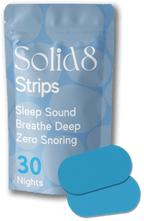
You can review Solid8 Nose Strips if an external nasal accessory is what you are comparing. Do not assume that combining products is automatically better. Ask what each addition is meant to accomplish and whether it changes an existing care plan.
What to bring to your appointment
If you have already tried a product, include what happened rather than simply calling it a success or failure. Did it feel uncomfortable? Did the adhesive irritate your skin? Did the original complaint remain? These details make a follow-up conversation more specific. Keep any product packaging or instructions available so you can describe exactly what you used without relying on memory.
Bring your short sleep notes, a medication list, and the names of any products already used. If a partner has observed your sleep, ask for a factual description. Avoid asking them to label the problem or estimate a diagnosis.
Explain what matters most to you: quieter nights, less oral discomfort, understanding nasal blockage, or confidence that your breathing has been assessed. These are different goals. Naming yours gives the conversation a practical direction.
Before leaving, ask what to do next and when to follow up. If an accessory is discussed, ask for the relevant limits and instructions. A clear plan is more useful than leaving with several products and no way to judge whether they fit your needs.
Frequently asked questions
1. Why do I sleep with my mouth open even when my nose feels clear?
A clear-feeling nose while awake does not explain everything that happens during sleep. Record any other symptoms and discuss a persistent pattern rather than assuming it is only a habit.
2. Does an open mouth mean I have sleep apnea?
No, mouth position alone does not establish sleep apnea. Tell a healthcare professional about repeated gasping, observed breathing pauses, or significant daytime sleepiness.
3. How can I tell whether this happens every night?
Ask a partner to describe repeated observations and keep brief notes. If you sleep alone, discuss your symptoms with a clinician rather than trying to diagnose yourself from a recording.
4. Is morning dry mouth proof of mouth breathing?
No. Dryness can have other causes, including medication effects. A dentist or doctor can help investigate persistent symptoms.
5. Should I buy mouth tape first?
Start by understanding the problem and discussing suitability. Mouth tape is an optional accessory, not a required first step for every person who sleeps with parted lips.
6. Can I tape my mouth when my nose is blocked?
Do not use tape to override blocked nasal breathing. Address the nasal concern with appropriate professional guidance before considering anything that restricts oral airflow.
7. Are nose strips and mouth tape interchangeable?
No. One sits outside the nose; the other sits over the lips. Compare their intended uses and limitations instead of assuming they are two versions of the same product.
8. Does stronger adhesive mean better sleep?
Adhesive strength describes attachment, not sleep quality. Start with suitability, then consider comfort and the manufacturer's instructions rather than choosing the strongest hold available.
9. Can I wear mouth tape with a night guard?
Ask your dentist before combining them. Our mouth tape and mouth guard comparison can help you prepare questions about the two categories.
10. What if I already use CPAP?
Bring mouth opening, dryness, or leak concerns to your sleep-care team. Do not add tape or alter prescribed settings on your own to address the problem.
11. Should I change my pillow?
You can discuss position and comfort, but a pillow purchase does not establish the cause of mouth breathing. Avoid expecting one pillow to resolve an unexplained breathing concern.
12. Is this advice suitable for children?
This article's accessory discussion is for adults. If a child repeatedly sleeps with an open mouth, ask their pediatrician to assess the situation rather than applying an adult mouth-taping routine.
13. How long should I wait before seeking help?
Do not wait to finish a sleep diary when you have concerning symptoms. For an ongoing pattern without an obvious explanation, arrange a routine discussion with your healthcare provider.
14. What should I look for in mouth tape if it is appropriate for me?
Review material information, sizing, directions, and removal guidance. Our mouth tape materials comparison provides a starting point for product questions.
15. What is the most useful thing to do tonight?
Write down your main concern and any nasal discomfort before bed. Ask for professional guidance if symptoms warrant it, and avoid turning the night into a test of how firmly you can keep your lips closed.
Choose an accessory that fits your routine
If you and your clinician have decided that mouth tape is appropriate, explore Solid8's product details before choosing your supply. Review the stated skin-contact features, directions, and removal guidance alongside your own comfort needs.
Explore Solid8 Mouth Tape- Review the product design before ordering.
- Follow the current application and removal instructions.
- Keep your clinician's guidance part of your decision.
Understanding why you sleep with your mouth open starts with useful observations and a clear next step. Give nasal difficulty, persistent dryness, and nighttime breathing symptoms the attention they deserve. Then make any product decision around the information you have gathered.
This article is for general education only and is not medical advice. Speak with a qualified clinician about persistent mouth breathing, breathing concerns, or a diagnosed sleep condition.