
Nose Strips vs Mouth Tape: Which Helps More at Night?
Share
If you are comparing nose strips vs mouth tape for better nights, the core difference is simple. Nose strips sit on the outside of your nose to gently open your nasal passages, while mouth tape sits over your lips to help keep them closed so you breathe through your nose. The “better” option depends on whether your main problem is a blocked nose, an open mouth, or both.
For people who mainly feel stuffy or restricted when they lie down, nasal strips can make breathing feel easier. If you wake with a dry mouth, sore throat, or you know you mouth breathe, mouth tape is usually the more targeted starting point. Many sleepers eventually find that a combination of both, like the 30 night Solid8 Better Sleep Bundle, supports the smoothest nighttime breathing routine.
- Nose strips work from the outside to gently widen the nasal passages and can help air move more freely through the nose.
- Mouth tape keeps the lips comfortably closed, which encourages nasal breathing and may reduce dry mouth and snoring for many people.
- If congestion or narrow nasal passages are your main concern, nose strips are usually the first tool to try.
- If your nose is mostly clear but you breathe through your mouth or wake with a dry, sticky mouth, mouth tape is often the stronger choice.
- If you struggle with both nasal restriction and mouth breathing, a combined setup like the Solid8 Better Sleep Bundle - Mouth Tape + Nose Strips (30 night supply) can be a practical, all in one starting point.
How Nose Strips and Mouth Tape Actually Work
To decide between nose strips or mouth tape, it helps to understand what they physically do to your airway. They are both simple pieces of adhesive material, but they affect breathing in very different ways.
What nose strips do
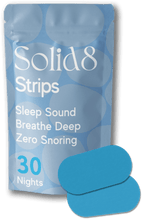
Nose strips are flexible adhesive bands that sit across the bridge of your nose. Many designs, including the nose strips in the Solid8 Nose Strips collection, use a spring like core that gently lifts the sides of your nostrils upward. That lift can widen the narrowest part of your nasal passages and help air move with less resistance.
There is no medication or fragrance in a standard nose strip. The strip simply changes the position of the soft tissue over your nose for several hours. People often describe the result as “less stuffy” or “more open” when they lie down, especially if their nose tends to collapse a bit with each breath.
Nasal strips are usually most helpful when:
- One or both nostrils feel partially blocked when you are on your back or side
- You have mild nighttime congestion and want a non drug option to support airflow
- You prefer not to tape your mouth but still want help with nasal breathing
What mouth tape does
Mouth tape is a dedicated strip that rests over your lips. Instead of sealing the mouth tightly, good designs use a balanced adhesive strength to keep the lips together while still allowing you to open your mouth if you need to. The goal is to stop your jaw and lips from drifting open so that your default path for breathing stays through the nose.
Many people notice that when their mouth stays closed, they wake up with less dryness and less irritation in the throat. Some partners also report quieter nights when mouth breathing is reduced. If you want a deeper breakdown of what makes a high performing mouth tape, you can explore this guide on the best mouth tape for sleep quality.
Because the lips and surrounding skin are sensitive, adhesive choice matters. Solid8’s Mouth Tape for Sensitive Skin - Hypoallergenic, Gentle Adhesive & Clean Removal is designed specifically for nightly use, with comfort and clean removal in mind. If your skin reacts easily, the comfort focused advice in this hypoallergenic mouth tape guide can help you choose and use tape more confidently.
Nose Strips vs Mouth Tape: Side by Side Comparison
Thinking in terms of “nose strips or mouth tape” can feel like an either or choice, but they are actually complementary tools. The table below shows how they compare across the factors most shoppers care about.
| Feature | Nose strips | Mouth tape |
|---|---|---|
| Primary action | Gently opens and supports the nasal passages from the outside | Helps keep lips closed to promote nasal breathing |
| Main goal at night | Reduce the feeling of nasal blockage or restriction | Reduce mouth breathing, dry mouth, and related snoring for some people |
| Best suited for | “Weak” or collapsing nostrils, mild congestion, narrow nasal passages | Habitual mouth breathing, open mouth snoring, morning dry mouth |
| Where you feel the effect | Across the bridge of the nose and sides of the nostrils | Around the lips and front of the mouth |
| How it feels | Light external tension, like a flexible band holding the nose a bit wider | Gentle pressure on the lips, similar to a soft bandage holding them together |
| When it may help snoring | When snoring is linked to nasal blockage or “whistling” through a tight nose | When snoring is worsened by sleeping with the mouth open |
| Ideal starting point if... | “Are nasal strips good for my blocked nose?” is your main question | “Why do I wake with a dry mouth?” is your main question |
| Can they be combined? | Yes, many people pair nose strips with mouth tape on the same night | Yes, commonly used together for a full nose plus mouth solution |
| Everyday practicality | Quick to apply, unobtrusive once positioned correctly | Requires a little practice, especially the first few nights |
In short, nose strips focus on the “input” to your airway, while mouth tape focuses on the “route” the air takes. When you match the tool to your main issue, both can contribute to calmer, quieter nights.
Nose Strips vs Mouth Tape for Snoring and Dry Mouth
A lot of people first discover these products while searching for ways to snore less or stop waking up with a desert dry mouth. It is worth separating these two problems so you can pick the right tool.
When nose strips may help snoring
Snoring often gets louder when the air passages are narrowed. If your nose feels tight or collapses slightly when you inhale, air can rush through a smaller opening and create vibration. Many people report that gently pulling the sides of their nose outward with their fingers makes their snoring temporarily quieter. Nose strips are designed to create a similar lifting effect, just in a hands free way that lasts through the night.
If you notice that your snoring is worst during allergy season, when you lie flat on your back, or when your nose is congested, starting with a good nasal strip can be reasonable. For more background on the role of nasal breathing in snoring, you can explore this guide to stopping snoring through nasal breathing.
When mouth tape may help snoring and dry mouth
In other cases the nose is fairly open, but the jaw and lips fall open during deeper sleep. That can dry out the mouth, pull the tongue backward, and increase the vibration that sounds like snoring. Mouth tape is not a medical treatment for snoring, but many people notice that when they can maintain nasal breathing, their snoring volume and morning dryness decrease.
If you regularly wake with a parched mouth, puffy gums, or a very scratchy throat, that is a strong sign that air is moving through your mouth at night. In that scenario, a well designed sleep specific mouth tape is usually more relevant than nose strips alone. You can learn more about the pros and cons of mouth taping in different situations in this article on mouth taping and sleep apnea, which also explains why it is important to speak with a healthcare professional if you suspect a breathing disorder.
If you are not sure whether nose strips or mouth tape matter more for you, starting with a short trial of both can be efficient. The Solid8 Better Sleep Bundle - Mouth Tape + Nose Strips (30 night supply) gives you enough nights to test each option separately, then together, so you can feel the difference instead of guessing.
How to Choose: Nose Strips or Mouth Tape First?
Instead of thinking “are nose strips or mouth tape better,” it is more useful to ask which one matches the symptoms you actually notice. Here is a simple decision path you can run through in under a minute.
Step 1: Identify your main nighttime symptoms
- Mostly nasal problems - stuffy nose, needing to breathe through the mouth because the nose feels blocked, “whistling” sound in the nose
- Mostly mouth problems - dry mouth, bad morning breath, sore throat, partner says you sleep with your mouth open
- Both nose and mouth issues - you feel congested and also wake with a dry mouth or have clear signs of mouth breathing
If your answer is primarily “nose,” then nose strips are a logical first step. If your answer is mostly “mouth,” then mouth tape is likely the better starting point.
When nose strips are usually the better first choice
Choose nose strips first if:
- Your nose feels narrow or restricted even during the day
- You can breathe clearly through your nose only when you hold the sides of your nostrils open with your fingers
- You dislike any sensation of adhesive across your lips
- You want to keep your mouth totally free, for example if you are easing into sleep products for the first time
In these situations, the question “should you use nose strips?” usually has a low risk, potentially high comfort answer. For many people, trying a box from a focused collection such as Solid8 Nose Strips is an easy first experiment.
When mouth tape is usually the stronger starting point
Mouth tape often makes more sense when:
- Your nose is mostly clear, but you still find your mouth hanging open in photos or on video while you sleep
- You consistently wake with a dry mouth or sticky saliva
- Gums feel irritated in the morning, which can be related to airflow over them all night
- Someone tells you that your snoring is loudest when your mouth is wide open
If this sounds like you, the limiting factor is probably not how wide your nose opens, but whether your lips stay sealed. A purpose designed option like Solid8’s Mouth Tape for Sensitive Skin keeps the focus on comfort and clean removal, which matters if you plan to make mouth taping part of your nightly routine.
When combining nose strips and mouth tape makes sense
Many adults have a mix of mild nasal restriction and mouth breathing. If you find your nose is not perfect and your mouth tends to open, relying on just one tool may not give you the full benefit you are hoping for. This is where combination use comes in.
Using a nose strip and mouth tape together on the same night aims to do two things at once: keep your airway as open as your anatomy allows, and encourage air to move through the nose instead of the mouth. For combination users, a pre built set like the Better Sleep Bundle - Mouth Tape + Nose Strips (30 night supply) is appealing because it provides both components for a month of experimentation without having to coordinate multiple purchases.
How to Use Nose Strips and Mouth Tape Safely
Whichever tool you choose, a few simple habits can make your experience more comfortable and predictable. Neither nose strips nor mouth tape are medical treatments, and they are not suitable for everyone, but used correctly they can fit comfortably into many adult nighttime routines.
General safety notes
- Do not apply over broken, sunburned, or irritated skin.
- Introduce any new product slowly, and stop if you notice persistent discomfort or rash.
- If you have significant breathing problems, suspected sleep apnea, or frequent waking gasping for air, speak with a healthcare professional before experimenting with mouth tape.
If you are curious about mouth taping but have a history of breathing disorders, it is especially important to read balanced guidance such as this article on mouth taping and sleep apnea and to check in with a clinician.
Step by step: using nose strips
- Clean the skin - wash the bridge of your nose with mild soap and water and dry completely. Oils and moisturizers can make any adhesive less reliable.
- Position carefully - center the strip over the bridge of your nose, with the ends sitting over the flared part of your nostrils, not on the soft tip.
- Press and hold - use your fingertips to press the strip down for 30 to 45 seconds so the adhesive can warm and grip.
- Test the effect - take a few deep nasal breaths. You should feel a gentle outward pull on the sides of your nose, not pinching.
- Remove gently in the morning - loosen one end first, then slowly peel back along the skin instead of straight up to minimize irritation.
Step by step: using mouth tape
- Test during the day first - while awake, place the tape over your lips for 10 to 15 minutes to learn how it feels and to confirm you can remove it easily.
- Start with clear nasal breathing - before taping, confirm that you can breathe comfortably through your nose. If not, address congestion first.
- Apply to dry skin - avoid heavy lip balm or oils immediately before use, since these can interfere with the adhesive.
- Center the strip - place the tape horizontally across closed lips, applying light pressure along the entire strip so it sits flat without wrinkles.
- In the morning, peel slowly - support the skin with one hand and peel the tape back along the lip line rather than pulling straight away from the face.
If you have facial hair, you might benefit from positioning tips that reduce tugging. Solid8 shares practical ideas specifically for this in this guide to mouth tape with a beard.
Solid8 Options: Bundle vs Individual Products
Once you know whether you want nose strips, mouth tape, or both, the next question is what to buy first. Solid8 offers options that fit different starting points and skin needs.
Better Sleep Bundle - main recommendation for combined support
If you are interested in both products or are unsure which will matter more, the Better Sleep Bundle - Mouth Tape + Nose Strips (30 night supply) is a straightforward place to start. You get a month’s worth of nose strips and a month’s worth of mouth tape in one purchase, which lets you:
- Test nose strips alone on some nights
- Test mouth tape alone on others
- Layer both together when you feel ready
This side by side self test is one of the most reliable ways to answer “do nose strips or mouth tape work better for me” without guesswork. Because the products are designed to work together, you do not have to worry about mismatched adhesives or awkward shapes.
Mouth Tape for Sensitive Skin - for clear mouth breathing issues
If you already know that open mouth breathing is your main challenge, you may prefer to start directly with Solid8’s Mouth Tape for Sensitive Skin. It is created specifically for nighttime use and easy removal, which is important if you plan to use it most nights of the week.
Shoppers who are comparing Solid8’s design to other brands sometimes want a deeper breakdown. For that, the articles Hostage Tape vs competitors: which mouth tape is actually the best and Is Solid8 better than Hostage Tape for sensitive skin provide more context on different product styles without forcing you to piece it together from scratch.
Nose Strips collection - for primarily nasal issues
When your biggest obstacle is nasal restriction, exploring the Solid8 Nose Strips range makes sense. The Solid8 lineup is focused on supporting better breathing and sleep rather than generic “beauty” strips, so you can keep your decision centered on nighttime airflow instead of blackhead removal products that are not designed for sleep use.
If you prefer to build a broader nighttime system over time, the Solid8 Sleep Better collection groups together the brand’s core sleep performance tools so you can add or adjust pieces as your needs change.
Common Mistakes to Avoid with Nose Strips or Mouth Tape
A good product can only do so much if it is used in a way that reduces its effectiveness or comfort. Here are some pitfalls to avoid so you get a fair test of whatever you choose.
Using generic tapes instead of sleep specific designs
It can be tempting to “hack” a roll of medical tape into a DIY nose strip or makeshift mouth tape. The problem is that most general purpose tapes are not optimized for the delicate facial skin, repeated nightly removal, or the shapes needed for comfortable breathing support. For a clear breakdown of why sleep specific strips usually perform better, see this comparison of mouth tape strips vs medical tape.
Applying over oily or heavily moisturized skin
Facial oils, rich creams, and heavy lip balms can significantly reduce grip for any adhesive product. If your strips fall off quickly or you feel like they never really adhere, check your skincare timing. For most people, applying moisturizers earlier in the evening and keeping the immediate nose and lip area relatively oil free at bedtime improves consistency.
Expecting instant, dramatic changes overnight
While some people feel a difference on the very first night, others need a few nights to adapt. Your body and brain may need time to get used to a new sensation on your face, and you may have to experiment slightly with placement. Giving yourself at least a week of consistent use before judging the result usually leads to clearer conclusions.
Ignoring persistent discomfort or breathing difficulty
Both nose strips and mouth tape should feel supportive, not restrictive. If you ever feel significantly short of breath, panicky, or like you cannot get enough air, you should remove the product and reconsider whether it is right for you. When in doubt, check with a healthcare professional, especially if you snore heavily, choke, or stop breathing during sleep.
Frequently asked questions about nose strips vs mouth tape
1. Are nose strips or mouth tape better for snoring?
It depends on what is driving your snoring. If your nose feels blocked and your snoring has a “whistling” or nasal quality, nose strips may help by opening the nasal passages. If your mouth hangs open and you wake with dryness, mouth tape is usually more relevant because it encourages nasal breathing. Some people notice the best results when they combine both, especially with a setup like the Solid8 Better Sleep Bundle.
2. Are nasal strips good if I already breathe through my mouth?
Nose strips can still feel good if they relieve nasal restriction, but they will not automatically stop you from breathing through your mouth. If mouth breathing is the main problem, you may want to pair nose strips with mouth tape or focus more on a mouth tape first approach, provided you can breathe clearly through your nose.
3. Can I use nose strips and mouth tape at the same time?
Many adults choose to use both on the same night. The typical sequence is to apply the nose strip first, confirm that nasal breathing feels comfortable, then add mouth tape. If you try this, it is smart to test the setup while you are still fully awake so you know you can remove both quickly if you ever feel uncomfortable.
4. How do I know if I should use nose strips instead of mouth tape?
Ask yourself where you feel the worst symptoms. If your nose feels narrow, one side blocks easily, or you cannot breathe comfortably through your nose without manually opening it, nose strips are a logical first trial. If your nose feels mostly fine but your mouth is always dry in the morning, a dedicated mouth tape like the Solid8 sensitive skin design is usually a closer match.
5. Is it safe to tape my mouth at night?
Many healthy adults use mouth tape nightly without issues, but it is not suitable for everyone. You should be able to breathe comfortably through your nose, you should be able to remove the tape easily on your own, and you should check with a healthcare professional if you have suspected sleep apnea or other breathing disorders. For a more detailed look at the safety questions, review Mouth taping and sleep apnea: what you need to know.
6. What is the best nose strip for sleep?
The best nose strip is the one that fits your nose comfortably, stays in place all night, and supports noticeably easier nasal breathing for you. Many shoppers prefer strips that are specifically marketed for sleep breathing support, such as the options in the Solid8 Nose Strips range, instead of cosmetic only strips that are designed purely for skincare.
7. Will nose strips or mouth tape fix sleep apnea?
No. Nose strips and mouth tape are comfort and habit support tools, not medical treatments for sleep apnea. Some people with treated sleep apnea may still choose to use them for added comfort, but any concerns about pauses in breathing, choking, or severe daytime sleepiness should be discussed with a healthcare professional.
8. Can I reuse nose strips or mouth tape?
Both products are designed for single use. Reusing them usually means weaker adhesion, less reliable positioning, and higher risk of skin irritation from repeatedly pressing older adhesive into the same area. Fresh, sleep specific products are a better choice than trying to “stretch” generic tape over several nights.
9. Do I have to use them every night to see benefits?
Many people notice the clearest improvements when they use nose strips or mouth tape consistently, but you do not have to commit to nightly use forever. It is reasonable to start with a 2 to 4 week experiment, like a 30 night bundle, to see how your body responds, then decide whether to continue nightly or reserve them for times when you feel you need extra support.
10. What if I have sensitive skin around my nose or mouth?
If your skin reacts easily, look for hypoallergenic, sensitive skin focused designs and introduce them gradually. Solid8’s Mouth Tape for Sensitive Skin and the guidance in this hypoallergenic mouth tape article can help you minimize irritation by choosing gentle materials, applying to clean skin, and removing slowly.
Choosing between nose strips and mouth tape is less about which product is “best” in general, and more about which one fits your airway, your habits, and your comfort level. If your nose is the weak link, nasal strips are a logical first move. If your mouth is the main culprit, mouth tape will usually give you more useful feedback. If both matter, testing a combined setup such as the Solid8 Better Sleep Bundle can quickly show you how nose and mouth support work together.
Disclaimer: This article is for general educational purposes only and is not medical advice. Nose strips and mouth tape are not treatments for sleep apnea or other medical conditions. Always consult a qualified healthcare professional before making changes to how you manage breathing problems, snoring, or sleep disorders.