
How Long Does It Take to Get Used to Mouth Tape?
How long does it take to get used to mouth tape? There is no established, research-backed adjustment period that applies to everyone. A promise that you will feel comfortable after three nights, one week, or a month goes beyond the evidence reviewed below. Getting familiar with a strip is also different from establishing whether mouth taping is appropriate for you.
Start with suitability, then consider comfort. Consult a healthcare professional before use and follow the product instructions. If a clinician considers mouth tape appropriate, focus on fit, skin response, and easy removal rather than completing a fixed number of nights. Difficulty breathing, pain, or distress is a reason to stop, not a milestone to push through.

Key takeaways
- There is no dependable countdown to feeling comfortable with mouth tape.
- Separate familiarity with the product from skin tolerance, breathing suitability, and sleep outcomes.
- A comfortable check while awake does not establish safety during sleep.
- Use the manufacturer’s instructions and clinician guidance, not a challenge to finish a pack.
- Compare materials and removal instructions before choosing a supply or subscription.
What does “getting used to mouth tape” actually mean?
People use the phrase to describe several different experiences. You might mean remembering another bedtime step, noticing adhesive around your lips, finding the application fiddly, or expecting a change in how you feel the next morning. Those questions deserve separate answers.
For example, learning where to store the pouch is a routine question. Deciding what to do about a rash is a skin question. Wondering why you cannot breathe comfortably through your nose is a healthcare question. Calling all three “adjustment” makes it harder to choose the right next step.
Use a more specific description: “the strip catches my facial hair,” “I cannot follow the placement diagram,” or “I feel uncomfortable with my lips covered.” Specific observations are more useful than deciding you are simply bad at mouth taping. For the broader starting checklist, see our guide for first-time mouth tape buyers.
Why there is no reliable mouth tape adjustment timeline
A 2025 systematic review in PLOS ONE examined ten studies involving 213 participants. It found limited and mixed evidence and highlighted risks with indiscriminate mouth taping, particularly where nasal obstruction is involved. It does not provide a general schedule for becoming comfortable with consumer mouth tape.
A study’s follow-up period is not an adjustment deadline. Neither is a brand’s pack size, a return window, or someone’s account of their first week. Those numbers describe different things. Avoid turning a review that says “I liked it by Friday” into advice that everybody should persist until Friday.
When reading a claim about timing, ask what was measured. Was it comfort, adherence, sleep quality, or a medical outcome? Who participated, and which product was used? Without those details, an exact number of days is not a useful benchmark for your own decision.
Our mouth taping safety guide is a useful companion, but the instructions on your pack and advice specific to your health take priority over a general article.
Comfort questions versus reasons to stop
Describe the experience before deciding what to change. The table below is a practical discussion guide, not a diagnostic tool or permission to keep using a product. If you are unsure which description fits, remove the tape and ask for advice.
| What you notice | What to review | Next step |
|---|---|---|
| You are unsure where to place the strip | The illustrated application directions | Ask the manufacturer before another application. |
| You notice the strip but have no discomfort | Whether the feel suits your preferences | There is no requirement to continue or reach a target duration. |
| Edges lift or catch facial hair | Placement, contact area, and product fit | Review the instructions rather than adding layers. |
| Itching, burning, soreness, or a rash | Your skin’s response | Stop use; seek advice for persistent or concerning symptoms. |
| Breathing difficulty, gasping, or significant distress | Whether mouth taping is appropriate | Remove it immediately and seek appropriate medical care. |
The National Heart, Lung, and Blood Institute lists interrupted breathing, frequent loud snoring, gasping, and daytime sleepiness among possible sleep apnea symptoms. Bring those concerns to a healthcare professional instead of using a comfort timeline to explain them away.
What to check before worrying about the number of nights
Start with the exact strip you bought
Keep the instructions for that product nearby. Compare the package, size, and illustrated placement with what you actually received. If something is unclear, ask the manufacturer to explain it in plain language. A video showing another brand is not a substitute for directions written for your strip.
Write down the product name and any size information before asking for help. This avoids a conversation about “the blue tape” or “the small one” when several versions may exist. A photograph of the unopened pack can also make a support request easier to understand.
Make room for your existing skincare routine
Follow the product’s skin preparation instructions without abandoning care your skin needs. If those instructions conflict with a prescribed treatment or an irritated area, ask a clinician rather than improvising. There is no benefit to making the routine more uncomfortable just to finish another application.
Our article on mouth tape and skincare helps you think through overlapping contact areas. Keep the question specific: which product touches which part of the skin, and can both sets of directions be followed?
Include taking it off in your decision
Read the removal instructions before application. Consider whether they are clear and manageable for you. If removal is painful or confusing, contact the manufacturer rather than repeatedly practicing an unpleasant step. “Stays on” is only one part of evaluating an adhesive product.
The American Academy of Dermatology notes that skin reactions can appear after a delay, and a product previously tolerated can later cause a reaction. A comfortable first application is not a lifetime pass. Our mouth tape removal guide offers additional questions to consider when shopping.
Looking at your first pack? Review the fabric, adhesive description, and available supplies on the Solid8 Mouth Tape product page. Choose from clear product information, not a promised adjustment deadline.
A practical way to organize your first-use questions
Once you have discussed suitability with a clinician, organize the practical details around questions rather than a seven-day challenge. The following checklist is for planning and communication. It is not a wear schedule, a breathing test, or a recommendation to start overnight use.
- Define your reason for considering the product. Write one sentence about the issue you hope to discuss or the routine you want to evaluate. Avoid assigning tape a medical job it has not been prescribed to do.
- Read the full directions. Include application, removal, single-use instructions, and situations when the product should not be used. Ask about missing or ambiguous information before opening another strip.
- Make stopping an ordinary option. Decide in advance that discomfort is enough reason to remove it. There is no streak to maintain and no need to finish a box to justify buying it.
- Record a useful observation. If use is appropriate and you follow the instructions, note a specific concern about handling or comfort. Do not convert that observation into a conclusion about your airway or sleep health.
- Choose the next action. That might be contacting support, asking your clinician a question, postponing use, or deciding the product does not suit you. A purchase does not commit you to continued use.
If a manufacturer or clinician recommends checking the feel while awake, follow their directions. Do not substitute a nap, because you are then asleep. An awake comfort check cannot establish what happens to your breathing during sleep or clear you to combine tape with prescribed equipment.
Keep a useful record, without turning bedtime into a test
A short note can help you explain a problem accurately. There is no need for a spreadsheet, a nightly score, or a rule that every morning must look better than the last. Choose information that would help a support representative or clinician answer your actual question.
Record what happened in ordinary language. “The left edge lifted before I went to bed” is more actionable than “it failed.” “Removal pulled on my mustache” gives a clearer starting point than “I have not adjusted yet.” Keep your observation separate from your guess about the cause.
| Observation | Why record it? | What it does not establish |
|---|---|---|
| Product name and size | Identifies the exact instructions to review | Whether the product is medically appropriate |
| Where an edge lifted | Helps explain a placement question | That stronger adhesive is needed |
| How removal felt | Makes a comfort concern specific | That more repetitions will solve it |
| A skin change and when you noticed it | Provides details for professional advice | The cause or diagnosis of a rash |
| Your next question | Turns the experience into a clear support request | A requirement to try again |
Why stronger tape is not an adjustment strategy
If you removed a strip, start by asking why. Did you dislike the sensation, misunderstand the placement, notice irritation, or feel anxious? Making removal harder does not answer any of those questions. Do not add another layer, household tape, or glue to keep the product in place.
Similarly, do not cut vents or reshape a strip unless its manufacturer explicitly instructs you to do so. If you want a different coverage style, ask about a product designed that way and discuss its suitability. Our gentle versus strong adhesive guide provides shopping context without turning adhesive strength into a goal.
You also do not need to buy several brands immediately. Start with the unanswered question. If you cannot explain what you want to change, another purchase may simply leave you comparing more packages without a clearer decision.
What if you already use CPAP or another sleep accessory?
Ask the professional managing your therapy before adding mouth tape. Follow prescribed equipment instructions and do not change treatment settings to accommodate an optional accessory. Keep product comfort questions separate from questions about leaks, treatment effectiveness, or changes in symptoms.
Nose strips are a separate category worn on the outside of the nose. The Solid8 Nose Strips page explains their external triple-band design. Adding a nasal strip is not clearance to use mouth tape when nasal breathing is difficult, and it does not establish that an uncomfortable taping experience is simply an adjustment issue.
Choose a supply around your decision, not a deadline
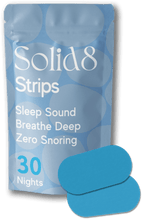
Solid8 describes its mouth tape as flexible woven fabric with hypoallergenic, latex-free adhesive, available in 30, 90, or 360 strips. Those are product details, not a promise about how quickly you will become comfortable. Skin responses vary, and the product page directs users to consult a healthcare professional before use.
If you are still evaluating whether a product belongs in your routine, consider the smallest suitable supply before committing to more. Review current purchase and subscription terms, including renewal and cancellation conditions. A lower price per strip is useful only if the purchase fits your needs.
There is also no obligation to use a strip every night because a pack is labeled as a monthly supply. A quantity description is not a treatment course. Make the buying decision after addressing suitability and comfort, rather than allowing the size of the order to dictate what you do next.
Frequently asked questions
1. How many nights does it take to get used to mouth tape?
There is no established number that applies to everyone. The research discussed above does not support a general adjustment deadline, so use product instructions and individualized advice rather than counting nights.
2. Should I give it at least a week?
Do not set a minimum that requires you to continue despite discomfort. A week is a calendar interval, not evidence that a product will become suitable or comfortable by the end of it.
3. Is simply noticing the strip a problem?
Noticing an unfamiliar accessory is different from describing pain or distress, but you do not need to ignore your preference. Remove it if you are uncomfortable, and ask about any sensation you cannot confidently explain.
4. What if I feel anxious with mouth tape on?
Remove it rather than trying to prove you can tolerate it. Discuss the experience with a healthcare professional before reconsidering use; an optional accessory does not require you to overcome distress.
5. Does a comfortable awake check mean I can sleep in it?
No. Comfort while awake does not establish breathing safety during sleep. Follow the manufacturer’s instructions and clinician guidance rather than treating a brief check as medical clearance.
6. Can I use a nap to practice?
A nap is still sleep, so it is not an awake comfort check. Do not use a shorter sleep period as a substitute for first establishing whether mouth taping is appropriate.
7. Should I buy stronger tape if I take it off?
First identify why you removed it. Stronger adhesion does not answer a question about anxiety, breathing, skin irritation, or personal comfort, and adding layers is not a solution.
8. What should I do if the strip comes loose?
Review the original application instructions and contact the manufacturer if the problem remains unclear. Do not secure a lifting strip with extra adhesive or assume that staying attached would make it suitable.
9. Can I reuse a strip during the adjustment period?
Solid8 specifies a fresh strip for each application. An adjustment period does not change single-use instructions; see our guide to whether mouth tape can be reused.
10. Does a beard mean adjustment takes longer?
There is no verified beard-specific adjustment timeline in the evidence reviewed here. Describe the actual problem, such as hair catching during removal, and ask about fit instead of assigning it extra nights.
11. Is redness a sign that my skin is adapting?
Do not interpret a skin reaction as progress. Stop using the product and seek advice if symptoms persist or concern you. A dermatologist can help assess a recurring reaction.
12. Should I stop using moisturizer to make tape work?
Do not abandon necessary skin care or alter prescribed treatment for an optional strip. Review where the products overlap, and ask for advice if their directions cannot both be followed.
13. Can nose strips make mouth tape suitable for me?
Using a nasal strip does not establish suitability for mouth taping. Treat each product separately and discuss persistent nasal breathing difficulties with a healthcare professional.
14. Should I buy a full year before I have tried it?
Consider resolving your suitability and comfort questions before making a large commitment. Compare supplies and purchase terms after deciding whether the product belongs in your routine, rather than buying around an expected adjustment date.
15. What if I decide mouth tape is not for me?
That is a valid outcome. Keep the product out of your routine and address any underlying sleep or breathing concern through the appropriate professional. You do not need to finish a pack to make that decision.
Make comfort part of the buying decision
Considering Solid8 after discussing suitability? Review the materials, shape, directions, and supply options before choosing. A clear understanding of the product is a better starting point than a promise that everything will feel different by a particular night.
- Check the design and contact area.
- Read application and removal directions.
- Choose a supply that fits your current decision.
This article is for general education and is not medical advice. Consult a qualified healthcare professional before mouth taping, particularly with breathing concerns or prescribed sleep equipment. Mouth tape does not treat sleep apnea or replace prescribed therapy.