
Mouth Tape vs Normal Tape: Why Sleep-specific Tapes Matter
Share
If you are comparing mouth tape vs normal tape, the short answer is simple: for sleep, do not use normal household or generic tapes on your lips. Sleep specific mouth tapes are designed for skin, breath, and overnight comfort. General tapes are not.
Normal tapes like duct tape, packing tape, or basic first aid tape are made for boxes and bandages, not for sealing your mouth for 7 to 8 hours. This is why sleep specific tapes matter, and why a purpose built option like Solid8 Mouth Tape is the safer, more comfortable path if you want to encourage nasal breathing at night.
Key Takeaways: Why Sleep-specific Tapes Matter
- Normal tape is not designed for overnight use on lips. Box tape, duct tape, masking tape, and many generic medical tapes can be harsh on facial skin, hard to remove, and unpredictable across a full night of sleep.
- Sleep specific mouth tapes use skin-first materials. Products like Solid8 Mouth Tape use flexible woven fabric with hypoallergenic, latex free adhesive that is gentle enough for nightly use but strong enough to last until morning.
- Shape and breath behavior are built for sleep. Sleep specific tapes are cut and sized to gently keep lips closed, not completely sealed like a piece of normal tape slapped across the mouth.
- You get predictable, repeatable results. Purpose built mouth tape is consistent from night to night, which is crucial if you are trying to reduce snoring, dry mouth, or mouth leaks with CPAP.
- The right tape choice is part of a larger sleep plan. Mouth taping can support nasal breathing, but it is not a medical treatment. Choosing a proper sleep grade tape is step one, then you fine tune fit, comfort, and whether it fits your specific situation.
What Mouth Taping Is Really For (And What It Is Not)
Mouth taping is a simple mechanical habit: placing a strip of tape across the lips to encourage nasal breathing during sleep. People explore it to reduce snoring, dry mouth, bad morning breath, and mouth breathing that can disrupt sleep quality.
It is important to be clear about what mouth taping is not. It is not a cure for sleep apnea or a replacement for professional medical care. If you suspect a sleep disorder, you should talk with a healthcare provider. Mouth tape is a support tool, not a stand alone treatment.
Within that context, the detail that often gets overlooked is the tape itself. The whole idea works only if the tape behaves predictably on the skin, through tossing and turning, and during changes in humidity and body temperature. This is where the mouth tape vs normal tape decision becomes critical.
Mouth Tape vs Normal Tape: Core Differences
On the surface, a strip of mouth tape and a strip cut from a roll of normal tape can look similar. Both are sticky. Both can hold the lips together. But they are not engineered for the same job, and those differences compound over a full night of sleep.
Here is a side by side comparison of sleep specific mouth tape (using Solid8 as an example) versus common normal tapes:
| Criterion | Sleep specific mouth tape (e.g. Solid8) | Normal tape (duct, packing, masking, generic medical) | What this means for sleep |
|---|---|---|---|
| Intended use | Designed specifically for overnight lip closure and facial skin contact | Designed for boxes, repairs, bandages, or general use, not prolonged lip sealing | Only one option is tested with sleep and lips in mind, which heavily affects comfort and predictability. |
| Material | Flexible woven fabric that moves with facial muscles | Plastic film, paper, or rough cloth that may be rigid or abrasive | Flexible fabric reduces pulling on the skin when you move your jaw or change position in sleep. |
| Adhesive | Hypoallergenic, latex free adhesive, dermatologist tested, clean removal | General purpose adhesives that can be very strong, not always formulated for sensitive facial skin | Skin focused adhesive lowers the risk of irritation and painful removal, especially with nightly use. |
| Strength vs gentleness | Balanced to stay put overnight but still release in the morning without residue | Either too weak (falls off) or extremely strong (sticks aggressively, leaves residue) | Reliability matters over 7 to 8 hours, but so does being able to remove the tape without damage. |
| Fit and shape | Cut to a size and shape that gently keeps lips closed | Rectangular strips that may cover too much area or seal edges awkwardly | Purpose made shapes reduce awkward gaps or over coverage that normal tape can create. |
| Compatibility | Made to be beard friendly and CPAP friendly | Not optimized for facial hair or masks, may lift or interfere | If you have a beard or use CPAP, this compatibility can be the difference between success and frustration. |
| Consistency night after night | Each strip is identical and pre cut for the same experience | You eyeball the size and placement every time | Consistency simplifies your routine and helps you judge whether mouth taping is helping your sleep. |
When you factor in each of these rows together, the gap between mouth tape vs normal tape becomes significant. Sleep specific tapes matter because they bundle all these small design decisions into a product that is actually meant to live on your lips for an entire night.
Why Sleep-specific Tapes Matter for Skin and Comfort
Your lips and the surrounding skin are some of the most sensitive areas on your face. Normal tape products simply are not formulated for that. Using them nightly can mean redness, micro tears, and a lingering burning sensation after you peel them off.
Sleep specific mouth tapes are built around this problem. For example, Solid8 Mouth Tape uses a hypoallergenic adhesive that is latex free and dermatologist tested, with clean removal. The woven fabric backing flexes with facial expressions instead of fighting them.
This balance of secure adhesion plus gentle removal is not an accident. If the tape is too weak, it peels off at 3 a.m. and your experiment with nasal breathing fails. If it is too strong, you dread pulling it off. Only sleep grade tapes try to hit that narrow middle ground.
Why Normal Tapes Are a Poor Choice for Sleep
It is tempting to grab the roll of tape from your junk drawer and test mouth taping tonight. From a convenience standpoint, it seems harmless. In practice, this is where most of the horror stories about mouth taping start.
Here are the most common categories of normal tape and why they are not suited to overnight lip closure:
- Duct tape and packing tape: These are built to survive shipping, outdoor projects, and heavy duty repairs. The adhesive is aggressive and the plastic backing is stiff. On lips, that can translate to skin damage and a feeling of being tightly sealed shut.
- Masking tape and painter’s tape: Slightly gentler, but not designed for moist, mobile skin. The adhesive can dry out and flake, or fail halfway through the night, which defeats the purpose of taping.
- Generic medical or first aid tape: Better than hardware store rolls, but still not designed specifically for long term use on lips. Some are made to secure bandages, which is different from handling the constant motion of breathing, swallowing, and micro expressions during sleep.
Normal tapes are also inconsistent. One brand of masking tape might be barely sticky, another might pull skin. You end up re learning how each new roll behaves on your face, which makes it hard to evaluate whether mouth taping itself is working for you.
This is why sleep specific tapes matter so much in this comparison. They remove the guesswork and allow you to focus on how your body responds, not whether the product itself is behaving reasonably on your skin.
What To Look For In A Good Sleep-specific Mouth Tape
Once you move past normal tape, the next question is what tape to use for mouth taping among the dedicated options. Not all sleep specific tapes are identical, but the best share a few core traits that simplify your decision.
Use this checklist when you compare options or browse a mouth tape collection:
- Clearly labeled for nightly mouth taping: The product should explicitly mention sleep and lips. If that language is missing, it probably was not tested for this use.
- Hypoallergenic, latex free adhesive: This is especially important if you have sensitive skin or a history of reactions to bandages or cosmetics.
- Flexible, breathable material: A soft woven fabric that moves with your face and does not trap sweat is much more comfortable than a solid plastic film.
- Clean, low residue removal: Look for claims of clean removal and gentle on sensitive skin. This becomes critical when you plan to use the tape nightly.
- Beard and CPAP friendly if relevant: If you have facial hair or use a CPAP mask, the tape should be designed not to conflict with those realities.
- Pre cut, consistent strips: Pre sized strips remove the nightly scissor work and give you the same experience each night.
Solid8 built its Mouth Tape collection around these principles. Each box includes pre cut strips made from flexible woven fabric, with a hypoallergenic, latex free adhesive that is marketed as gentle on sensitive skin and formulated for clean removal.
Solid8 Mouth Tape: A Case Study In Sleep-specific Design
To make the mouth tape vs normal tape comparison concrete, it helps to look closely at a single sleep specific product. Solid8 Mouth Tape is a straightforward example of how much design work sits behind what looks like a simple strip of fabric.
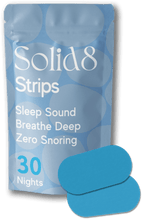
Each pack contains 30 pre cut tapes, which gives you one month of nightly use. You can also opt for a 3 month supply (90 tapes) or a 1 year supply (360 tapes), and there are subscription options that Solid8 notes can save you up to 37 percent while keeping your supply on autopilot.
The backing is a flexible woven fabric, not a stiff plastic. That flexibility matters when you yawn, adjust your jaw, or roll over. Instead of fighting your movements and peeling, the tape can move with your facial muscles while still encouraging your lips to stay closed.
The adhesive is described as hypoallergenic, latex free, gentle on sensitive skin, and formulated for clean removal with no residue. Solid8 positions this as suitable for delicate skin but strong enough to stay on until morning. Compared to normal tape that can leave sticky patches or pull skin, this level of tuning is a core difference.
Solid8 also highlights that its mouth tape is beard friendly and CPAP friendly. That means the adhesive and strip dimensions are chosen so they can adhere even with some facial hair and sit comfortably alongside a CPAP mask to help reduce mouth leaks.
In other words, every part of the design is tied back to sleep specific realities that normal tape never tried to solve. This illustrates why sleep specific tapes matter, not just as a safety decision, but as a comfort and practicality choice.
Are You A Good Candidate For Mouth Taping At All?
Before you decide what is the best mouth tape for you, it is worth asking whether mouth taping fits your situation. Not everyone should tape their mouth for sleep, even with proper sleep specific products.
General considerations many people use include:
- You can breathe comfortably through your nose: If your nose is constantly blocked, mouth taping will feel uncomfortable and is not a good idea to test on your own.
- You do not have untreated severe sleep apnea or serious breathing disorders: If you suspect these, speak to a healthcare provider first. Mouth tape should not be used as a workaround for medical treatment.
- You are willing to start gradually: Many people test the feeling while awake first and then during short naps before trying a full night.
If you are also exploring snoring, dry mouth, and mouth breathing in more depth, Solid8 has a detailed guide on why mouth breathing causes dry mouth and how to address it. That can help frame mouth tape as one tool, not the whole solution.
How To Use Sleep-specific Mouth Tape Correctly
Even the best sleep specific tape can feel strange the first night. A simple, consistent routine makes the process smoother and reduces the urge to over tighten or over cover your mouth the way you might with normal tape.
- Prep your skin. Wash and dry the area around your lips. Avoid heavy moisturizers right before bed, since they can interfere with adhesion.
- Test your nasal breathing. Gently close your mouth without tape and breathe through your nose for a minute or two. If it feels easy and natural, you are likely fine to proceed.
- Apply the tape gently. With a strip like Solid8 Mouth Tape, center it over your lips, then press lightly from the middle outward. The aim is gentle closure, not a compressed seal.
- Lie down and assess. Spend a few minutes in your typical sleep position. If you feel anxious, you can peel a corner slightly or remove the tape and try again another night.
- Remove slowly in the morning. Support the skin with one hand and peel slowly with the other. With sleep specific tapes that emphasize clean removal, this should feel manageable, even on sensitive skin.
If you want a detailed walkthrough, Solid8 has a step by step tutorial on how to effectively use mouth tape as a snoring aid and combat dry mouth. It expands on fit, position, and common adjustments you might make in your first week.
Mouth Tape vs Normal Tape In Real Sleep Scenarios
So far we have compared mouth tape vs normal tape in theory. It is just as useful to see how they diverge in everyday situations where people actually consider taping their mouth at night.
Scenario 1: The snorer with a dry mouth
You wake up with a sore throat, dry tongue, and complaints about your snoring. You suspect you are sleeping with your mouth open. Normal tape might seem like a cheap trial, but its harsh adhesive and unpredictable grip can easily leave you with irritated lips and a sour experience.
A sleep specific mouth tape gives you a controlled test. Because each strip behaves the same, you can tell whether encouraging nasal breathing appears to help your dryness and nighttime noise, instead of wondering which part is due to the tape itself.
Scenario 2: The CPAP user with mouth leaks
If you use CPAP with a nasal mask and still wake up with a dry mouth, mouth leaks are a likely suspect. Placing a normal tape under or over your mask strap can collide with the mask seal, peel mid night, or refuse to come off cleanly in the morning.
Sleep specific tapes that are described as CPAP friendly, like Solid8 Mouth Tape, are sized and shaped with this use in mind. They aim to sit comfortably under the mask without compromising the seal, and their adhesive is chosen to survive a humidified airflow environment.
Scenario 3: Sensitive skin or a history of reactions
If band aids make your skin angry, normal tape is even more likely to cause trouble. The risk of redness, small tears, and lingering sensitivity is real when you tear off strong adhesives from an area you move all night.
Hypoallergenic, sleep specific tapes are built around this concern. Solid8, for example, positions its product as gentle enough for nightly use on sensitive skin with clean removal. If you want an in depth comfort first perspective, their guide on hypoallergenic mouth tape for sensitive skin unpacks what to prioritize.
When Mouth Tape Works Best: Pairing With Other Sleep Tools
Mouth taping does not have to act alone. In many cases, people get their best results when they pair a sleep specific tape with other breathing supports. Here again, normal tapes fall short because they are not built to integrate with a broader sleep routine.
For instance, if nasal congestion is part of the picture, combining a quality nasal strip with a mouth tape can open the airway from both directions. Solid8 offers a Better Sleep Bundle that pairs its hypoallergenic mouth tape with Extra Strong Triple Band nose strips so you can support nasal breathing and reduce mouth breathing at the same time.
Because both products in that bundle are designed for overnight use on facial skin, they behave predictably together. Trying something similar with normal tape plus a random nose strip often leads to peeling, overlapping adhesives, and frustration when one product interferes with the other.
Putting It All Together: Why Your Tape Choice Really Matters
At first glance, using tape to gently keep your mouth closed for sleep seems like a tiny detail. But as you dig into mouth tape vs normal tape, the differences add up quickly. One class of product is built for boxes, walls, or bandages. The other is built for lips, skin, and 8 hours of real sleep behavior.
This is why sleep specific tapes matter so much. They turn mouth taping from a risky DIY experiment into a controlled, repeatable part of your sleep routine. When you choose a purpose built option like Solid8 Mouth Tape, you are paying for more than adhesive. You are paying for material choices, skin focus, beard and CPAP compatibility, and the peace of mind that each strip will work like the last.
If you are ready to explore nasal breathing at night, start by upgrading from normal tape to a true sleep specific product. Then pay attention to how you feel in the morning, how your throat and mouth feel, and how your partner describes your nighttime noise. From there, you can fine tune or speak with a professional about how mouth taping fits into your broader sleep plan.
Can I use normal tape like duct tape or masking tape for mouth taping?
Using normal tape for mouth taping is not recommended. Duct tape, packing tape, masking tape, and most household tapes are not designed for sensitive lip skin or for 7 to 8 hours of continuous wear. They can irritate skin, feel harsh, and behave unpredictably overnight. Sleep specific mouth tapes are built for this exact use.
What tape should I use for mouth taping if I am just starting?
If you are new to mouth taping, choose a tape that is clearly labeled for sleep and facial use, with hypoallergenic, latex free adhesive and a flexible fabric backing. A purpose built option like Solid8 Mouth Tape gives you pre cut, consistent strips that are designed for nightly use on the lips, which is safer and more comfortable than experimenting with normal tape.
Is mouth taping safe if I have sleep apnea?
Mouth taping is not a treatment for sleep apnea and should not replace prescribed therapies. If you have diagnosed or suspected sleep apnea, or any serious breathing disorder, talk with your healthcare provider before using mouth tape. They can help you decide whether sleep specific tapes fit safely alongside CPAP or other treatments.
What is the best mouth tape material for sensitive skin?
For sensitive skin, look for a flexible woven fabric with a hypoallergenic, latex free adhesive that is marketed for clean, gentle removal. Solid8 Mouth Tape follows this pattern and is described as gentle on sensitive skin while still holding through the night. Avoid rigid plastic films or generic normal tapes that can pull or tear delicate lip skin.
Can I reuse a strip of mouth tape for another night?
Mouth tape is meant to be single use. Once you peel it off, both the adhesive and the cleanliness are compromised. Reusing a strip can reduce adhesion, allow bacteria buildup, and increase the risk of skin irritation. Products like Solid8 include one fresh strip per night so you always start with clean, consistent adhesion.
Does mouth tape work if I have a beard or mustache?
Standard normal tapes often struggle to stick over facial hair and can pull uncomfortably. Sleep specific options that are engineered to be beard friendly, such as Solid8 Mouth Tape, are more likely to adhere between hairs and maintain a seal. If you have a very thick mustache or beard, you may need to experiment with positioning to find a secure, comfortable placement.
Can I just cut strips of medical paper tape for my mouth?
Medical paper tape is designed for skin, which is better than hardware store tape, but it is not specifically created for lips and overnight mouth closure. Adhesive strength, flexibility, and residue can still vary. Dedicated sleep specific mouth tapes remove that uncertainty and are optimized for exactly this task.
How long does a box of Solid8 Mouth Tape last?
A standard box of Solid8 Mouth Tape contains 30 tapes, enough for approximately one month if you use one strip per night. Solid8 also offers 3 month supplies with 90 tapes and 1 year supplies with 360 tapes, plus subscription options if you want automatic refills.
Is it normal to feel weird the first night I use mouth tape?
Yes, many people find the first few nights feel unusual simply because the sensation is new. Using a sleep specific tape that is soft, flexible, and not overly tight usually makes the adjustment easier than experimenting with stiff normal tape. Starting with short naps or trial periods before a full night can also help you adapt.
What should I do if mouth tape feels too strong or hard to remove?
If removal feels harsh, first make sure you are using a sleep specific tape that emphasizes gentle, clean removal. Support the skin with one hand and peel slowly with the other. If it still feels too strong, you can try slightly reducing the area of contact or testing a different brand that focuses on sensitive skin, such as Solid8’s hypoallergenic mouth tape.