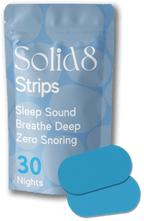

Mouth Tape for Drooling at Night: Best Adhesive Strength for Stays
Share
If you wake up to a damp pillow or find saliva at the corners of your mouth, it is natural to wonder whether mouth tape can help with drooling at night and what adhesive strength you actually need for it to stay on. Many people report that gently taping their lips closed encourages nasal breathing and reduces the gaps that let saliva escape, but only if the tape’s adhesive is strong enough to stay put through a full night without irritating the skin.
The key is balance. For drooling at night, adhesive strength has to be firm enough to hold the lips together even when your jaw relaxes and you roll from side to side, yet gentle enough that you can remove the tape in the morning without redness or sticky residue. In this guide you will learn how mouth tape may help with drooling, how to choose the right adhesive strength so it actually stays, and how a sensitive-skin option like the Solid8 Mouth Tape for Sensitive Skin is designed to pair staying power with comfort.
- Mouth tape may help with drooling at night by encouraging a gentle lip seal so saliva is less likely to leak onto your pillow.
- The best adhesive strength is strong enough to stay on through a full night of shifting and jaw relaxing, but still easy to remove.
- Skin type, facial hair, and sleep position all change how much adhesive strength you need for reliable stays.
- Hypoallergenic, latex free adhesives on soft fabric backings often provide a good mix of secure hold and skin comfort.
- Starting with a sensitive-skin tape like Solid8 Mouth Tape lets you test whether mouth taping reduces your drooling without overcommitting to a harsh adhesive.
Why drooling at night happens in the first place
Before you decide whether mouth tape can help with drooling, it helps to understand why drooling appears at night at all. In many cases it is a simple combination of gravity, relaxed muscles, and how you breathe when you sleep.
Mouth breathing and a relaxed jaw
As you fall asleep your jaw muscles relax. If you habitually breathe through your mouth, or if your nose feels stuffy, your lips may part without you noticing. Saliva that would normally be swallowed can then slip out of your mouth and onto your pillow. Even a narrow opening can lead to a surprising amount of drooling over several hours.
Side and stomach sleeping
Side and stomach sleepers often see more drooling at night. When one side of your face is pressed into the pillow, gravity pulls saliva toward that corner. If there is any gap at the lip corner, saliva can slowly escape and create that familiar damp patch. This is why people often ask, “How do I stop the corners of my mouth from drooling while I sleep?”
“Why do I drool with my mouth closed?”
You might feel that your mouth is closed all night yet still wake up with drool. In reality, your lips may only be lightly touching. As your muscles fully relax, a tiny slit can open at one side. Over hours, saliva finds that weak spot and travels out. In these cases, a consistent, gentle lip seal from mouth tape can sometimes help by closing the small gaps that your muscles alone cannot keep shut.
If you want a deeper look at how nasal breathing and mouth posture affect sleep, you may find Solid8’s guide on how to stop snoring with nasal breathing useful, since many of the same principles overlap with drooling control.
Does mouth tape help with drooling in sleep?
The core question is simple: does mouth tape help with drooling, or is it just another trend? There is no single guarantee, but many people report less drooling at night once they establish a comfortable mouth taping routine.
How a lip seal may reduce drooling
Mouth tape is designed to encourage nasal breathing by gently holding the lips together. When it comes to drooling, that same seal can:
- Limit how far the jaw can drop open during deeper sleep
- Reduce small corner openings where saliva typically leaks
- Help keep saliva inside the mouth so it can be swallowed naturally
- Decrease the chance of dribbling from the side of the mouth, especially for side sleepers
This is very similar to how mouth tape may help with dry mouth at night by reducing air flow through the mouth, which is explored in more detail in Solid8’s dry mouth guide.
When mouth tape is more likely to help with drooling
Mouth tape tends to be most helpful for drooling at night when:
- You primarily drool because your lips part during sleep, not due to a medical condition
- You notice drool marks mainly on the side of the mouth that rests on the pillow
- You often wake up with your mouth dry and slightly open
- You can breathe comfortably through your nose while awake
If nasal breathing already feels good while you are awake, gently supporting it with tape at night can be a practical experiment to see if it cuts down on drooling and pillow dampness.
The role of adhesive strength: what it takes for tape to stay on all night
For mouth tape to help with drooling, it has to stay in place. That depends heavily on adhesive strength, but “stronger” is not always better. Aggressive adhesive can feel secure yet be uncomfortable to remove. The goal is a level of strength that survives a full night of movement but still lets you peel the tape off without a struggle.
Light, medium, and strong adhesive strengths
Most mouth tapes fall into one of three practical adhesive strength categories:
| Adhesive strength | Typical feel | Who it may suit | Potential drawbacks |
|---|---|---|---|
| Light | Soft, easy to remove, sometimes feels “barely there” | Very sensitive skin, short naps, testing mouth taping for the first time | May loosen during the night, especially for side or stomach sleepers |
| Medium | Secure but flexible, usually removes cleanly when peeled slowly | Most people who want the tape to stay across a full night | May need careful application on oily skin or with facial hair |
| Strong | Firm, “locked in” feel, often used for very active sleepers | People who have tried lighter adhesives that would not stay on | Can feel intense on sensitive skin, removal may be uncomfortable for some |
For drooling at night, many people find that a medium adhesive is a good starting point. It offers enough strength to keep the lips sealed so saliva does not escape easily, while staying manageable for nightly use.
Why Solid8 focuses on gentle but reliable hold
The Solid8 Mouth Tape for Sensitive Skin uses a hypoallergenic, latex free adhesive on a soft, flexible fabric backing. The design aims to stay on through normal tossing and turning while supporting clean, comfortable removal for most users when they peel it off slowly.
If you want an overview of what to look for in mouth tape in general, including adhesive quality and backing materials, Solid8’s mouth tape checklist for first time buyers is a helpful companion read.
How your sleep style affects the adhesive strength you need
The same strip of tape behaves differently on a quiet back sleeper versus an active side sleeper. Your sleep style has a big impact on how strong the adhesive should be to stay on and actually help with drooling.
Back sleepers
Back sleepers typically put the least stress on mouth tape. Gravity pulls the jaw backward instead of downward, so the lips may not fight the tape as much. Light to medium adhesive strength is often enough for a full night of stay, especially if you do not move much.
Side sleepers
Side sleepers have two drooling related challenges. First, gravity encourages saliva to slide toward the lower corner of the mouth. Second, the pillow can gently rub against the tape, especially near the corners of the lips. For this group, reliable stays often require a medium adhesive strength and careful application that covers the corners well. Solid8 has a full guide on this scenario in Mouth Tape for Side Sleepers, which also applies to drooling control.
Stomach sleepers
Stomach sleepers place more pressure on the lower face. The tape may experience direct friction from the pillow, so a firmer adhesive can be helpful. At the same time, comfort becomes even more important, since the skin around the mouth is being pressed into the bedding for hours. A soft, flexible backing plus a steady medium adhesive can be a practical compromise.
Active or “toss and turn” sleepers
If you frequently change positions at night, the tape will flex and move more. In that case, moving up to the stronger end of a medium adhesive can help the tape stay put long enough for mouth tape to help with drooling, as long as your skin tolerates it well.
If you are unsure what adhesive strength you need, starting with a sensitive skin focused option like Solid8 Mouth Tape lets you test drooling reduction without committing to a harsh, hard to remove tape. You can always adjust the way you apply each strip to dial in more or less hold.
How to mouth tape for drooling control: step by step
Knowing how to mouth tape correctly matters as much as choosing the adhesive. A quick, rushed application can leave gaps at the corners that still allow drooling at night, even if the adhesive strength is good.
1. Check that nasal breathing feels clear
Before you try mouth taping, sit or stand upright and breathe only through your nose for a few minutes. If it feels hard to get enough air, or if you feel short of breath, do not tape your mouth. Instead, talk with a healthcare professional about your breathing first.
2. Prepare the skin
Clean, dry skin helps any adhesive stay on better. Before bed:
- Wash around your mouth with a gentle cleanser and water
- Rinse well and pat dry
- Avoid putting oils, balms, or heavy moisturizers right where the tape will sit
Less oil means the adhesive can grip the skin more evenly, which improves the tape’s ability to stay in place until morning.
3. Shape your lips and jaw
Relax your face. Close your lips lightly, without clenching your teeth. You want a natural, comfortable resting position that you can maintain while sleeping. If you tend to drool from the corners, pay attention to how those corners meet.
4. Apply the tape
With a product like Solid8 Mouth Tape for Sensitive Skin, you typically place one strip horizontally over the center of the lips:
- Peel the strip from the backing carefully to preserve the adhesive
- Center it over your lips so it covers both corners, not just the middle
- Smooth outward with your fingertips to remove small wrinkles and secure the edges
If drooling tends to appear from one specific side of your mouth, make sure that side is well sealed by gently pressing the tape at that corner to increase contact.
5. Test comfort while awake
Wear the tape for 10 to 20 minutes while reading or scrolling your phone. Make sure you can breathe comfortably through your nose and that the tape feels secure but not painful. This short trial helps you catch any issues before you fall asleep.
6. Removing the tape in the morning
To protect your skin, take the tape off slowly. Start at one corner and peel back gradually while supporting the skin with your other hand. If you use a sensitive-skin adhesive, most people find removal straightforward when done gently.
How to choose the right mouth tape for drooling at night
There are many mouth tapes on the market, and they can look similar at first glance. For drooling control, focus on features that affect adhesive strength, comfort, and how reliably the tape stays on the skin you actually have.
1. Adhesive material and feel
Look for wording such as “hypoallergenic” and “latex free” if your skin tends to react to adhesives. A well formulated adhesive aims for a consistent hold without a “burning” or overly tight feeling. Solid8 Mouth Tape uses a hypoallergenic, latex free adhesive so that it can support nightly use for many people who prefer a gentler formula.
2. Backing material
Flexible fabric style backings tend to move with your skin as you change positions. This can help the tape stay on without peeling at the edges. Stiffer, plastic style backings may feel more noticeable on the face. For drooling at night, a soft, breathable backing is often more pleasant, since the tape is in place for many hours.
3. Shape and size
Some tapes are small ovals that sit only at the center of the lips, while others are wider strips that cover the full width of the mouth. If you drool from the corners of your mouth, a strip that covers corner to corner makes more sense than a small central patch. Solid8’s mouth tape uses a strip format so you can position it to cover the areas where you tend to see drooling.
4. Skin sensitivity history
If you have reacted to bandages or medical tape before, it is smart to test a new mouth tape during the day for a short period. Apply one strip for 30 to 60 minutes and see how your skin responds. Choosing a product formulated for sensitive skin, such as Solid8 Mouth Tape, can provide additional reassurance as you experiment.
5. Routine and supply
Once you confirm that mouth taping seems to help with drooling, it becomes part of your nightly routine. At that point, having a steady supply matters. Solid8 offers mouth tape in formats suited to consistent use, and the broader Solid8 Mouth Tape collection can be useful if you want to look at different supply sizes.
Comparing option types: where Solid8 fits in
To put adhesive strength in context, it helps to compare common tape styles you might encounter when searching for drooling solutions at night. This comparison looks at general types, not specific competing brands.
| Type | Typical adhesive strength | Pros for drooling at night | Considerations |
|---|---|---|---|
| Generic drugstore tape or bandage strips | Varies, often strong and not designed for lips | Easy to find, holds firmly in some cases | Not tailored to face movement, may be uncomfortable on lip skin, removal can be harsh |
| Specialized mouth tape with rigid backing | Medium to strong | Can feel very secure, structured shape keeps lips in place | Some users may notice the rigid feel, which can be distracting |
| Soft fabric mouth tape for sensitive skin (such as Solid8) | Medium, balanced for nightly use | Designed for facial skin, flexible backing that moves with you, generally easier removal when peeled slowly | Requires proper application on clean, dry skin to maximize hold |
Solid8’s approach sits in the third category. The aim is an adhesive strength that stays consistent through the night while still respecting that the skin around your mouth is thinner and more delicate than other areas.
Handling specific drooling patterns
Not all drooling looks the same. Understanding your pattern can help you decide how to place the tape and whether you need more or less adhesive strength for reliable stays.
Drooling from the corners of the mouth
If your main issue is drooling from one or both corners, focus your taping strategy here:
- Choose a strip wide enough to reach both corners comfortably
- Apply the tape horizontally, then press gently at each corner to make sure there are no visible gaps
- If one side is the “problem” side, you can angle the strip slightly so that corner gets more coverage
Drooling with a mostly closed mouth
Some people say “I drool with my mouth closed” because the central part of the lips stays together but the sides soften open late in the night. In that situation, a consistent, medium strength adhesive can help the tape keep those edges sealed long enough to limit drooling.
Waking up with both drool and dry mouth
It may sound odd, but waking up with drool marks and a dry mouth can happen when you mouth breathe heavily. Extra air flow dries the mouth, while any pooled saliva that reaches a lip gap can leak out. Mouth taping may reduce this combination by reducing mouth breathing. For more on the dry mouth side, you can review Solid8’s dry mouth guide.
When mouth tape might not be enough on its own
Mouth tape is a practical tool, but it is not a universal fix for every type of drooling at night. In some cases, it may help a little or not at all, and checking in with a professional is wise.
You should be cautious about relying on mouth tape alone if:
- You have known breathing issues or suspect sleep apnea
- You struggle to breathe through your nose even while awake
- Drooling is sudden, severe, or accompanied by other new symptoms
- You have significant difficulty swallowing
In those cases, it is better to speak with a healthcare provider before experimenting with mouth taping. Mouth tape is a comfort tool, not a medical treatment, and it works best when it supports healthy breathing habits you already tolerate well.
If your main concern is ordinary drooling at night and you want a simple, comfort focused way to test whether adhesive support helps, starting with a strip like Solid8 Mouth Tape for Sensitive Skin is a straightforward next step. It is part of the broader Solid8 Sleep Better collection, which is built around small, nightly habits that can support a calmer, less messy night’s sleep.
Over time, if you find that mouth tape helps with drooling and also encourages quieter, more nasal based breathing, you may decide to make it a regular part of your sleep routine. For some people, pairing better nasal breathing with tools like nose strips can be another angle to explore, and Solid8’s Nose Strips collection exists for that purpose.
Disclaimer: The information in this article is for general educational purposes only and is not medical advice. Mouth tape, including products from Solid8, is not intended to diagnose, treat, cure, or prevent any disease. If you have underlying health conditions, breathing concerns, or questions about whether mouth tape is appropriate for you, speak with a qualified healthcare professional before use.
FAQ: Mouth tape, adhesive strength, and drooling at night
1. Does mouth tape really help with drooling at night?
Mouth tape may help with drooling at night for many people because it encourages the lips to stay gently sealed, which makes it harder for saliva to escape onto the pillow. Results vary, and factors like sleep position, nasal breathing, and the adhesive strength of the tape all play a role in how much improvement you notice.
2. What adhesive strength is best if I drool a lot?
If you drool heavily or sleep on your side, a medium adhesive strength is often a good starting point. It is usually strong enough to stay on through a full night but can still be removed without excessive effort when you peel it back slowly. Products like Solid8 Mouth Tape for Sensitive Skin are designed around this balanced level of hold.
3. How do I stop drooling from the corners of my mouth specifically?
To reduce drooling from the corners of the mouth, choose a strip that covers the full width of your lips and pay special attention to pressing down the corners when you apply it. Making sure the adhesive has good contact at those points can limit the tiny gaps where saliva tends to leak out during the night.
4. Why am I drooling at night even when my mouth feels closed?
Many people who think their mouth is fully closed actually have a very small gap at one corner once their muscles fully relax. Over several hours, saliva can find that opening and create drool marks. Mouth tape can sometimes help by providing a more consistent seal than your muscles alone can maintain.
5. Is mouth tape safe to use every night for drooling?
Many people use mouth tape nightly without issues, especially when they choose a hypoallergenic, sensitive-skin product and remove it gently. However, only a healthcare professional can advise on safety for your specific situation. If you have trouble breathing through your nose, or any significant medical condition, you should speak with a clinician before making nightly mouth taping part of your routine.
6. Will stronger adhesive always work better for drooling?
Not always. Very strong adhesive may feel secure but can be uncomfortable to remove and may not be ideal for sensitive skin. For many people, a thoughtfully designed medium strength adhesive that is meant for facial use provides a better long term experience while still helping the tape stay on throughout the night.
7. Can I just use regular tape or bandages instead of mouth tape?
General purpose tapes and bandages are not designed for the movement and sensitivity of lip skin. Their adhesives and backings may be too harsh or uncomfortable for nightly use. Mouth tape products, including the ones in the Solid8 Mouth Tape collection, are developed specifically with sleep and facial comfort in mind.
8. How long will it take to see if mouth tape reduces my drooling?
Some people notice a difference after the first few nights, while others need a week or two to adjust and fine tune placement. It can take a little trial and error to find the best angle, tension, and adhesive strength for your particular drooling pattern and sleep style.
9. Should I combine mouth tape with nose strips for drooling?
If your drooling is linked to difficulty breathing through your nose, opening the nasal passages with a nose strip may make nasal breathing feel easier, which can support mouth taping. Solid8 offers a dedicated Nose Strips collection that some people pair with mouth tape to support a full nasal breathing routine. Always make sure you can breathe comfortably through your nose before sealing your lips.
10. Where can I learn more about choosing mouth tape beyond drooling control?
If you are new to mouth taping and want a broader overview of how to evaluate different products, including comfort and sleep quality, Solid8’s guide on the best mouth tape for improving sleep quality is a helpful next read. It builds on the same adhesive and comfort principles discussed here, not just for drooling at night but for overall sleep experience.